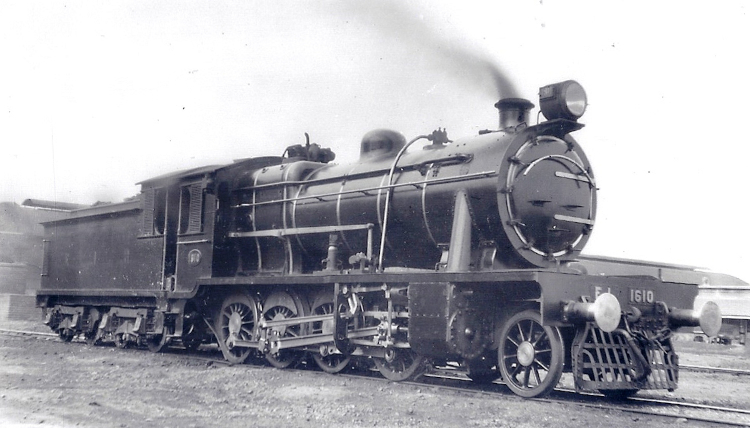
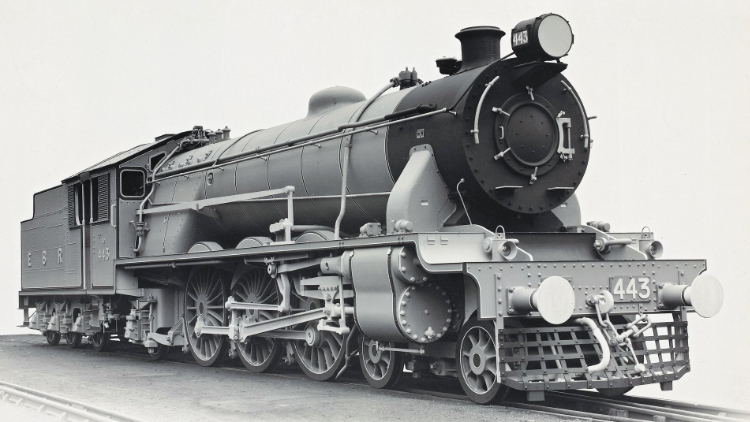
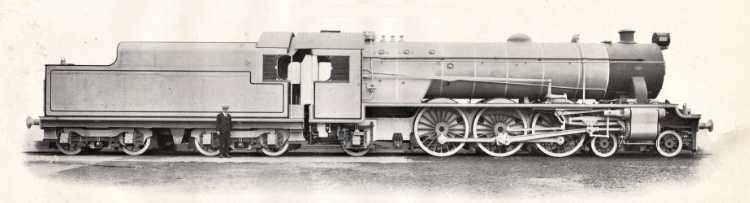
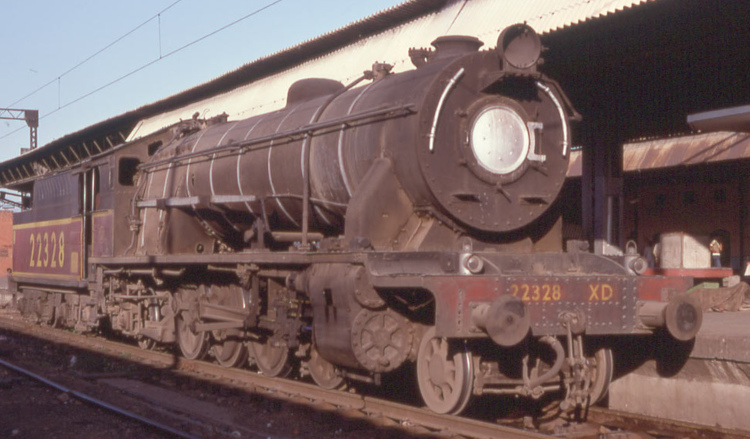
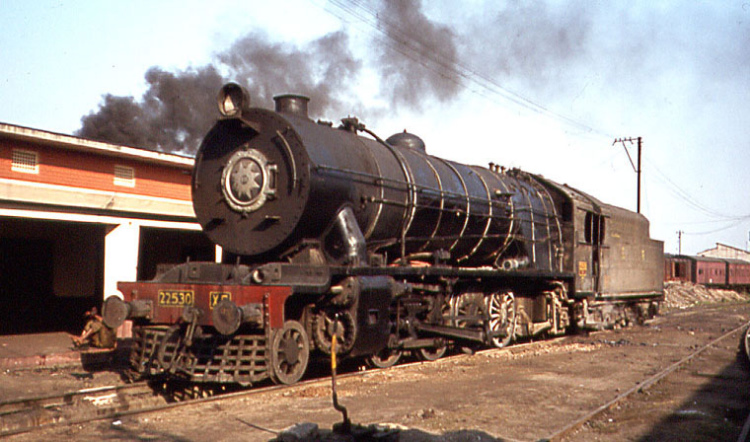
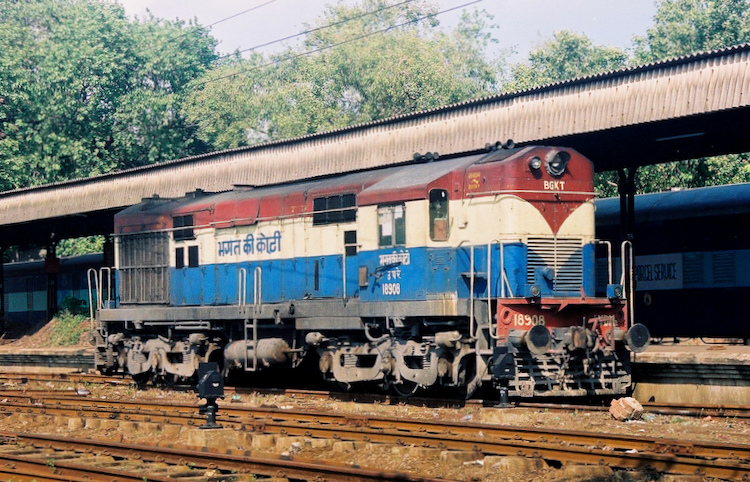
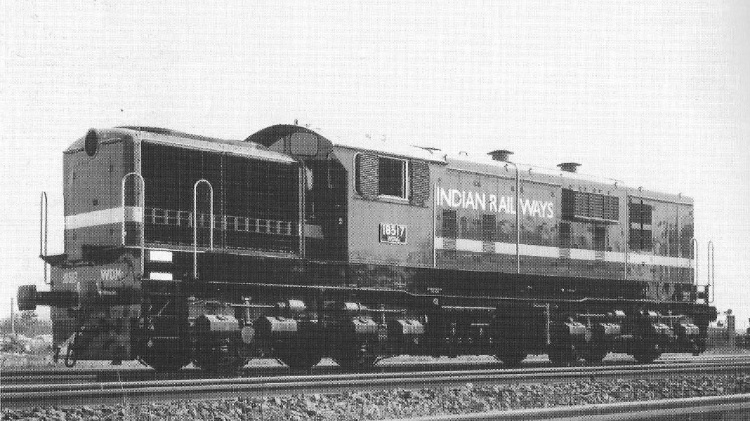
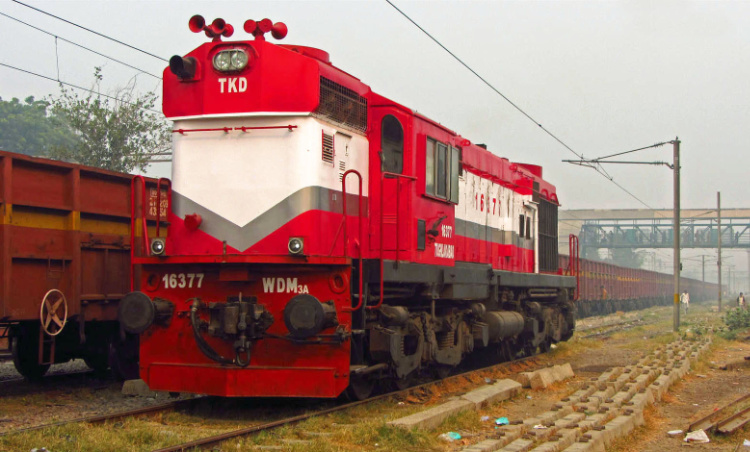
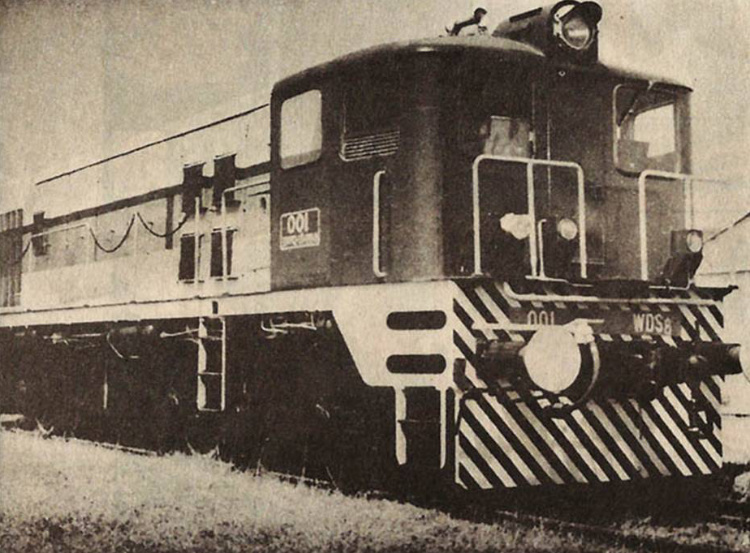
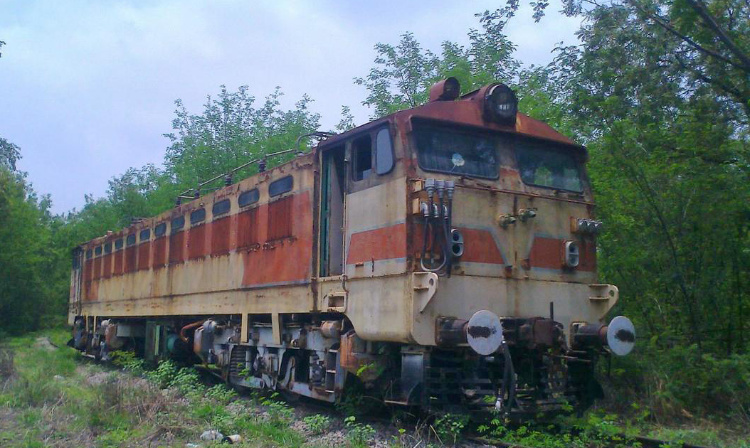
Steam locomotives were the first type of locomotives, powered by steam engines using coal or wood as fuel. They played a crucial role in early railway transportation.
1. SG, HP, HG
These early classes were BESA designs from 1903-1910, used in many areas, but performed poorly because they were British designs not well-adapted to Indian conditions. They had narrow grates and fireboxes meant for high-grade coal, inside cylinders, and other such typical British features of the period. The SG was a 0-6-0, the HP was a 4-6-0 and the HG was 2-8-0.
Superheated versions of these designs were classified as SGS, HPS and HGS. Some locomotives were also converted from saturated to superheated to better perform in Indian conditions. These were classified SGC, HPC and HGC.
2. XA
These were the smallest and lightest locomotives of IRS design for broad gauge. Used mainly for branch line light traffic. 4-6-2 arrangement. 13t axle load. 180 psi boiler pressure with two outside cylinders.
113 were built by Vulcan Foundry between 1929 and 1935.
3. XB
Light passenger, 4-6-2, BG, with an axle load of 17 tons. 180 psi boiler pressure with 2 outside cylinders. 99 were built, mostly by Vulcan Foundry, with North British and Armstrong Whitworth making a few.
This class had problems with stability and sideways oscillation, which led to the Bihta accident (see below) where over a hundred lives were lost when a passenger train derailed at speed.
No locos of this class have been preserved in India. In Pakistan, an ex-EBR XB class loco, #450, was known to be in good condition at Moghulpura Works, Lahore, in 1994. It was the only one sent to the then West Pakistan from the then East Pakistan (Bangladesh today).
4. XC
Heavy-duty 4-6-2 BG passenger loco. A larger version of the XB design, with an axle load of 19.5 tons. Two outside cylinders (23 in × 28 in). 72 were built in total by Vulcan Foundry and William Beardmore & Co between 1928 and 1931. They were known as the “big brother” of The Flying Scotsman. Generally disliked by the crew because of instability at higher speeds.
The photographer Colin Garratt recounts an attempt to hide one of the last of these locos that was intended for the scrapyard at the Bardhaman shed with the help of the shed foreman. The loco, however, was discovered and scrapped. The last XC was also extensively photographed by Garratt in repainted colours standing in for The Flying Scotsman.
5. XD
"X Dominion" loco for light freight, 2-8-2, BG. This was widely used for freight duties, with nearly 200 built in all (a second batch was built in the 1940's). Axle load of 17 tons.
Variants:
AWD: Similar design made by Baldwin Locomotive Works in the World War II period.
CWD: Similar design made by the Canadian Locomotive Company and the Montreal Loco Works. Along with AWD, the largest imported class, numerically.
6. XE
"X Eagle" loco for heavy freight, 2-8-2, BG. These were the most powerful of the IRS designs. 22.3t axle load. These locos were huge: 7' diameter boiler with 210 psi of pressure. Two cylinders, outside.
Built between 1928 and 1930 by William Beardmore & Co and Vulcan Foundry. XE 3634 (22541) has been restored and is currently homed at Rewari Steam Shed.
Variants:
AWE: Made by Baldwin Locomotive Works during and post World War II period when British manufacturers could not meet demand.
7. XT
Light Tank, 0-4-2T, BG, Caprotti valvegear. Used for light passenger duties. In the '40s Ajmer workshops began producing this class of loco.
8. XP
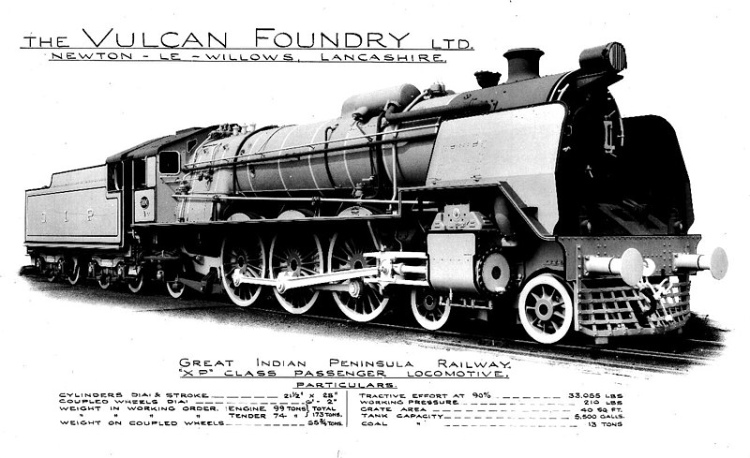
Experimental class built by Vulcan Foundry for GIPR in 1937. Only two were made. The aim was to gain the power of the XC within the operating area of the XB and to achieve running mileages of 200,000 between overhauls, and a monthly average of 10,000 miles. These were very high figures for the time. The boiler and firebox of the XB were taken as the basis, although details were modified, and the wheels and cylinders were of the same dimensions. Boiler pressure was higher at 210lb, and the tractive effort of 31,200lb was greater than that of both the XB (26,760lb) and the XC (30,625lb).
Both locomotives were fitted with Caprotti valve gear, and both had roller bearings on all engine and tender wheels; one Timken (3100) and one Skefco (3101). They weighed 99 tons, with an axle load of 18-2/3 tons, and a grate area of 45 sq ft.
The XP class was the basis for the post-war WP class. The two locos carried GIPR running numbers 3100 and 3101, and on CR the all-India numbers were 22599 and 22600.
9. WP
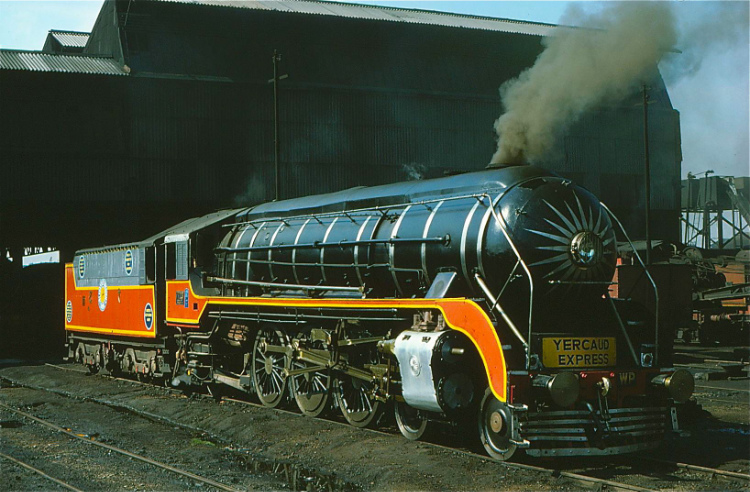
A 4-6-2 Pacific class introduced after World War II for passenger duties, marking the change from 'X' to 'W' for broad gauge locos. It was capable of doing up to 110km/h and remained IR's crack locomotive for many years. WP's were designed specifically for low-calorie, high-ash Indian coal, by Railway Board designers in India.
18.5t axle load; 5' 11" boiler with 210 psi pressure; 30,600lb of tractive effort.
Several WP's remained in service until the '80s. Easily recognized by the cone-shaped bulging nose with (usually) a silver star device painted on it.
In total 755 were built between 1947 and 1967. Baldwin Locomotive Works, Montreal Locomotive Works, Canadian Locomotive Company, Fablok of Poland, Lokomotivfabrik Floridsdorf and CLW were the builders. Early prototypes from Baldwin were labelled WP/P; the CLW batch made after 1963 were badged WP/1.
Four of these are still in working order at Rewari Steam Shed. Five more are preserved or plinthed at various locations in India.
10. WG
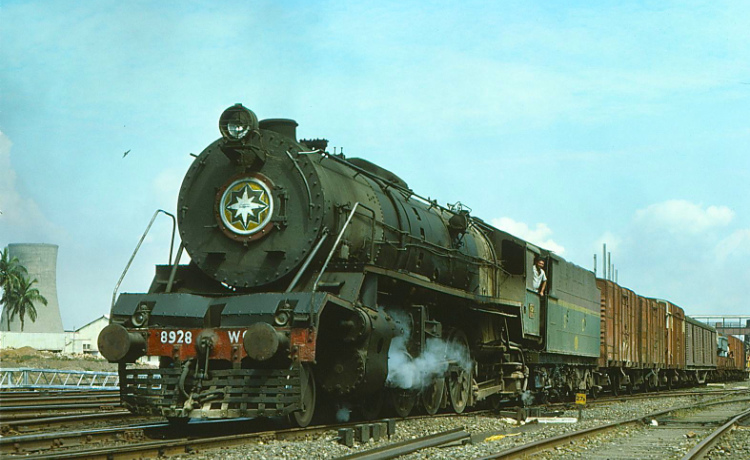
Until the advent of diesels and electrics, IR's BG freight workhorse; capable of about 88km/h, and with a tractive effort of about 38,890lb.
Initially imported (several were supplied by the North British Locomotive Co.), CLW began production of them in 1950, the first one, WG 8401 being named 'Deshabandhu'. More than 2,400 of these were built between 1950 and 1970 by CLW. The last BG steam locomotive built by India was a WG, #10560 named 'Antim Sitara'.
The WG may have the distinction of being the class of loco that was manufactured in the largest number of countries, as units were built in England, Scotland, Germany, Austria, USA, Japan, Switzerland, and of course in India.
Some WG locos were marked 'WGx'. This was not a separate class of loco, but simply indicated that the loco had CBC knuckle couplers for working block freight rakes, especially on SER.
11. WL
There were two classes of BG 4-6-2 locomotives of the WL type. The first were 4 locomotives built by Vulcan Foundry in 1939 for the North Western Railway, and these went to Pakistan on partition.
However, the Indian WL 4-6-2 was a new class built in 1955. Initially, 10 locomotives were built by Vulcan Foundry. They were designed to operate passenger trains on lines denied to the WP class; and so are lighter and smaller. While the new standard express WP class weighed 102 tons, the WL weighed 89 tons, giving an axle load of 16¾ tons, against the WP's 18.5t. Five WLs were allocated to the Southern Railway, and five to the Northern Railway. Ten years later, production began at CLW, and WL 15014-15107 were built there in the years 1966-1968.
WL #15005 (VF, 1955) hauled the last regular BG steam service in November 1995. This loco was preserved for a number of years at the NRM. It is now completely revived and is at the Rewari Steam Shed.
12. WT
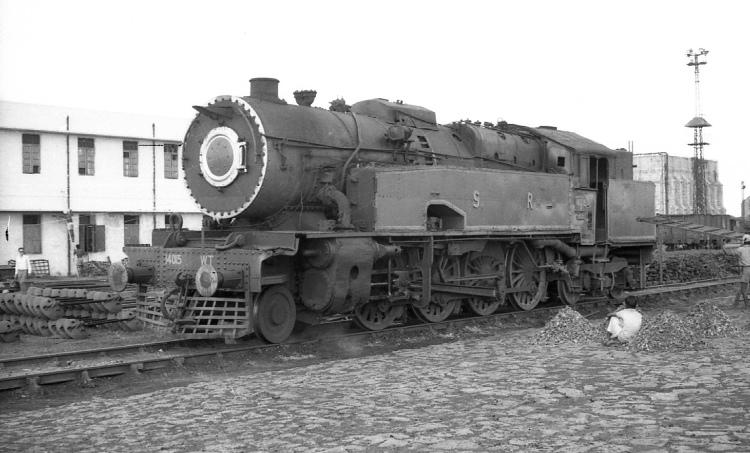
The broad-gauge WT was a 2-8-4T tank loco built for the busy and heavy suburban trains around Calcutta, before those lines were electrified. It is a noteworthy design for two reasons. It was the first locomotive to be fully designed at CLW; and it is probably the world's last new design of main line steam locomotive to go into series production. Ten were built by CLW in 1959-1960; and a further 20 in 1965-1967 -- these went to the Madras area. The last WTs were operating in the Rajahmundry area in the early 1980s.
They were large and powerful tank locomotives: they had the boiler and grate area of the WL class, with the WP's larger cylinders. Total weight of the WT was 123t, with an axle load of 18t.
13. YP
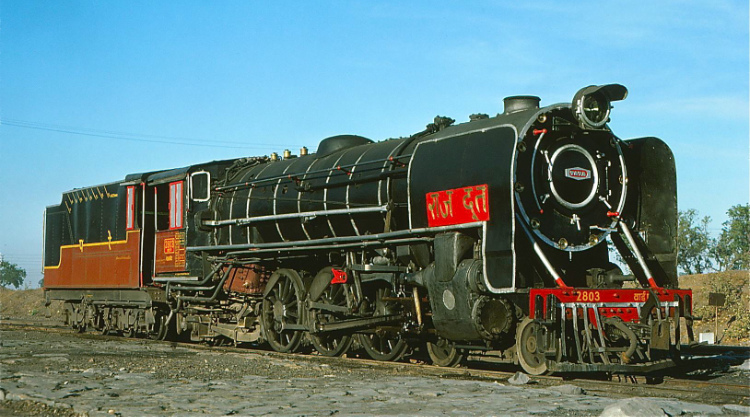
These 4-6-2 MG passenger locomotives were adapted Baldwins ordered for the Jodhpur network in 1948. 10.5 ton axle load. Tractive effort of about 18,400lb. In total 871 were built between 1952 and 1968, a majority by CLW and Telco.
YP 2151 has been restored to running order at Rewari. There are many of this class plinthed outside various IR offices and facilities.
14. YG
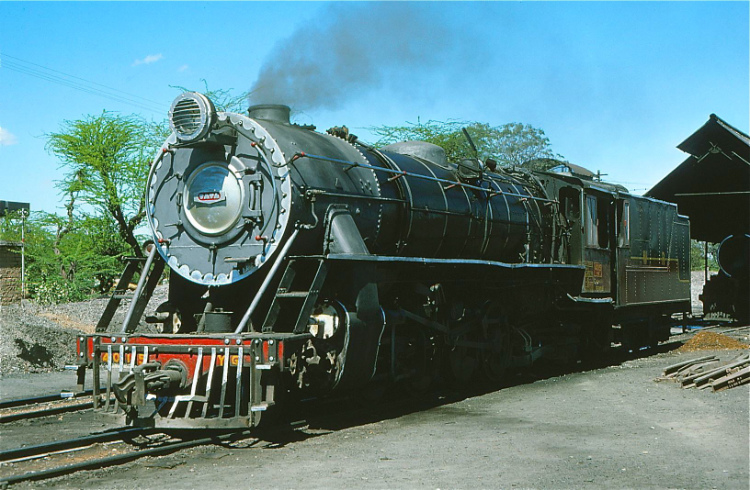
These 2-8-2 locos were MG freight workhorses. Initially imported from Germany, though some also came from Baldwin. Like YP's they also had a 10.5 ton axle load. Tractive effort of about 23,450. More than a 1000 units were built by CLW and Telco until 1972.
YG's 4252, 3415, 3438 and 3724 are at Rewari Steam Shed and steamed regularly. Many are also preserved at various large stations of IR.
15. X
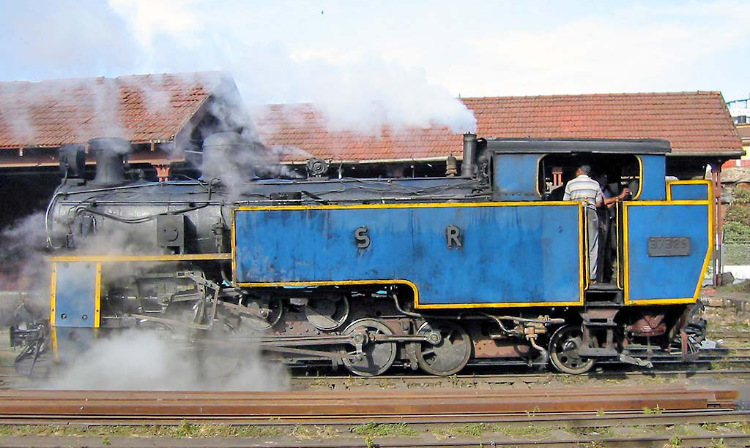
These MG 0-8-2T's are rack and pinion compound locos used by the Nilgiri Mountain Railway. First batch of 12 were delivered between 1914 and 1925 by SLM. Second batch of 5 in 1952. These locos have two high-pressure and two low-pressure cylinders. The low-pressure ones drive the rack gears while the high-pressure ones drive the main wheels.
Since 2004, the Golden Rock Workshops have converted many to oil-fired and have manufactured new ones. #37384 is the only original coal-fired version from SLM left in service. In August 2021, the Workshops commissioned #37400, newly manufactured and coal-fired.
16. B
These 2' NG locos of the Darjeeling Himalayan Railway are saddle tank (0-4-0ST). Initially made by Sharp, Stewart & Co in 1899, more were made North British and Baldwin. Since 2004, Golden Rock Workshops have made a few oil-fired ones. Weight 14 tons, with 26" coupled wheels and 11"x14" cylinders. Tractive effort of 7,750lb.
17. F
2-8-2 locos with bogie tenders built between 1926 and 1950 by Nasmyth Wilson, UK. Most were in service in CR.
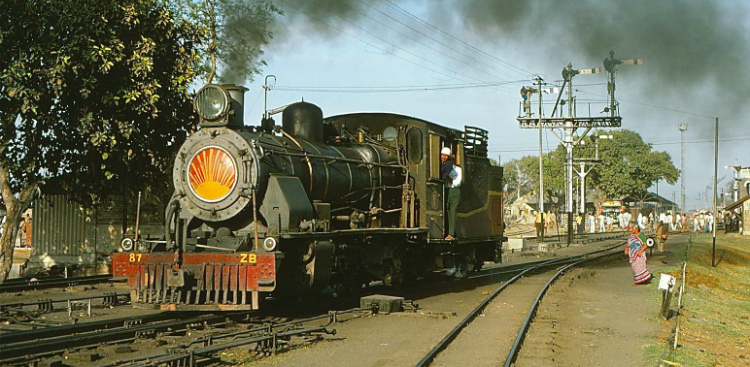
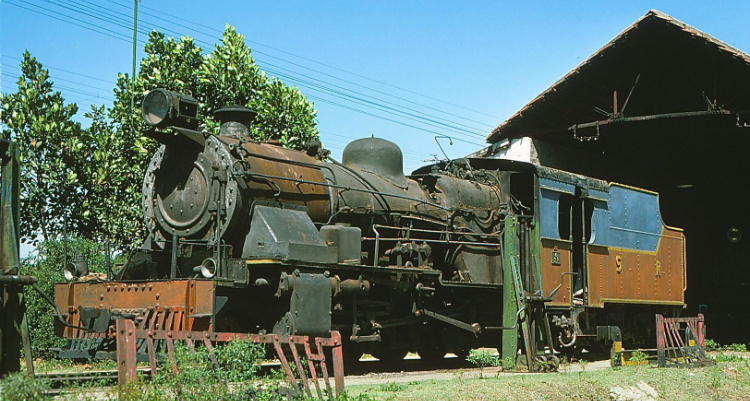
18. ZB
2-6-2 NG loco (2'6") built for Gaekwar Baroda State Railway.
19. ZP
An NG (2'6") 4-6-2 loco with 6-wheel tender, some built by Nippon Sharyo, Japan, around 1955. Was in service primarily in CR and SER.
20. ZD
The original ZD class for 2'6" gauge was to be an IRS design of 4-6-2 (1925), based on the BNR Pacifics (class C, later CC or CS), with an axle load of 8 tons, and a loco weight of 41 tons. These were never built.
The ZD class as constructed was a modern 2-8-2 using a boiler based on the MG YL class (2-6-2) which had a pressure of 210lb. The 6 locos were built by Nippon Sharyo in 1957-58 to work trains on the two lines radiating north and south from Murtajapur. They had a 7 ton axle load.
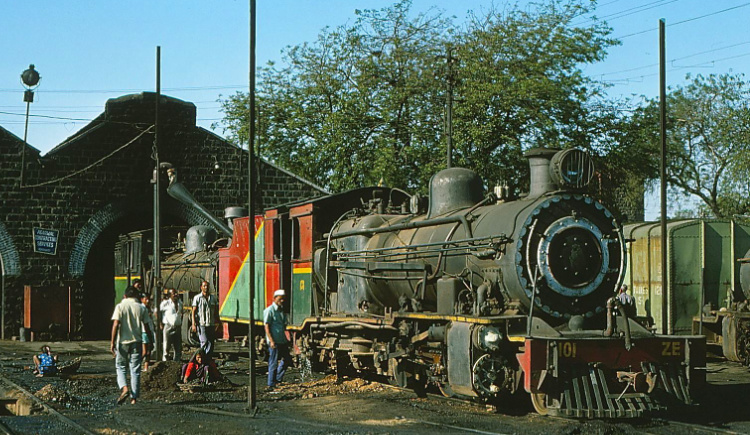
21. ZE
An NG (2'6") 2-8-2 loco with 6-wheel tender, some built by Kawasaki Rolling Stock of Japan, in 1955; was in service in CR, SER. This ZE class is not the same as the IRS class ZE specified in 1925. Most were based in Nainpur by the late 1980s.
Diesel locomotives use internal combustion engines, usually running on diesel fuel. They replaced steam engines due to higher efficiency and lower maintenance.
Mixed Use Locomotives
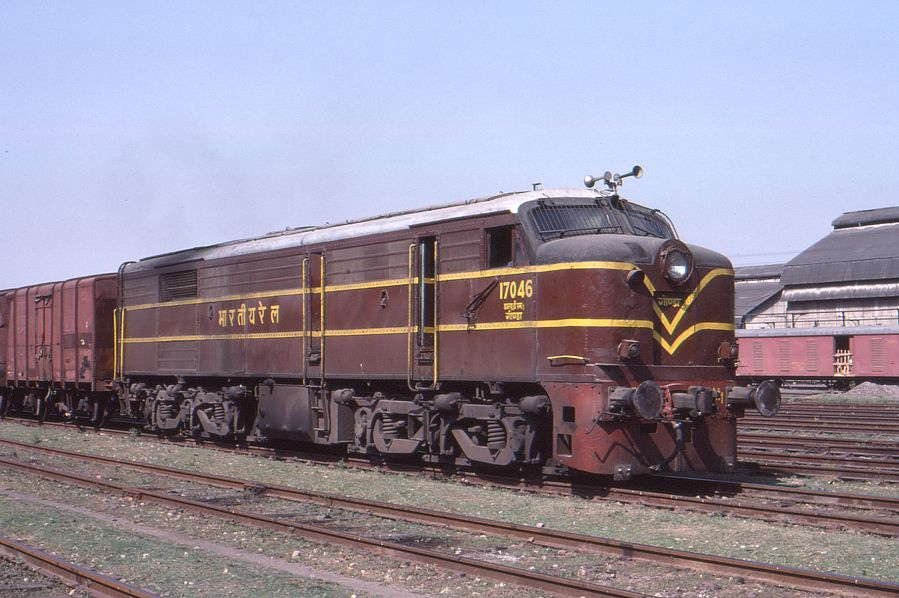
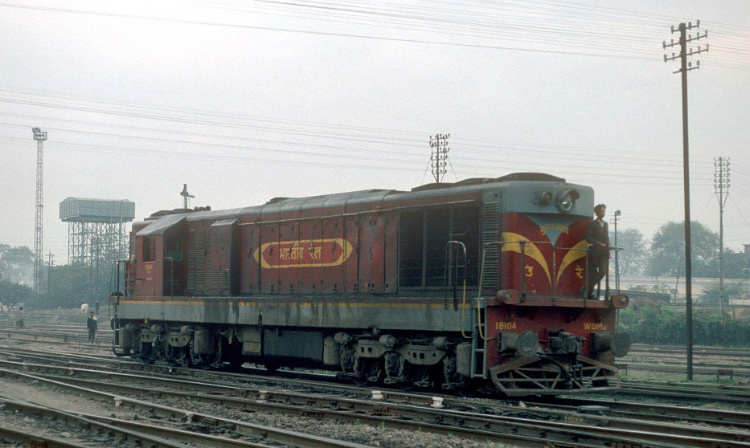
1. WDM-1
(Class name carried over from old system.) 1957 ALCo models ("World Series" DL500 or 'FA' loco), Co-Co 12-cylinder 4-stroke turbo-supercharged engine; 1950/1830 hp. 100 of these were supplied in all. Initially (1957-1958) 20 were supplied and used for ore/coal freight on SER, but later also used for the first dieselized expresses on ER and SER, e.g., the Howrah-Madras Mail. The remaining units of this class arrived in 1959.
WDM-1 locos had Co-Co wheelsets (thus differing from FA units in other countries). There was also a dual-cab variant, though details (how many, sub class etc.) are not known.
In the late 1990s, the remaining units were all in SER, based at Bondamunda and Waltair and relegated to shunting or piloting duties as they were withdrawn/condemned. There also used to be some at Gonda and Gorakhpur, used for carrying sugarcane traffic.
The very first WDM-1 (#17000) is preserved at the National Rail Museum.
| WDM-1 Specs |
|---|
| Builders | ALCo |
| Engine | ALCo 251B, V-12 four stroke diesel; 1000rpm max, 400rpm idle; 228mm x 266mm bore/stroke; compression ratio 13:1; centrifugal pump cooling system (2457l/min @ 1000rpm), fan driven by eddy current clutch (76hp @ engine rpm 1000). |
| Governor | GE 17MG8 |
| Transmission | Electrical, GE GT-518 traction generator |
| Traction Motors | GE 761A1 |
| Horsepower | 1950hp (1830hp site rating) |
| Axle Load | 18.6t |
| Bogies | Pennsylvania type cast steel Co-Co |
| Weight | 111.2t |
| Tractive Effort | 27.9 tons at 25% adhesion |
| Max. Speed | 105km/h |
2. WDM-2
(Class name unchanged after reclassification.) 2600 hp ALCo models (RSD29/DL560C). Co-Co, 16-cylinder 4-stroke turbo-supercharged engine. The first units were imported fully built from Alco in 1962. After DLW was set up, 12 of these were produced from kits imported from ALCo (order no. D3389). After 1964, DLW produced this loco in vast numbers in lots of different configurations. This loco model was IR's workhorse for the second half of the 20th century, and perhaps the one loco that has an iconic association with IR for many people. These locos were gradually converted to higher output variants (see below) throughout the early and late 2000s. As of January 2021, only 10 of the 2600hp version remain, mostly doing inferior duties.
These locos have a max. speed of 120km/h. There are generally speaking no restrictions for running with the long hood leading, although in some cases the practice was to limit it to 100km/h. The gear ratio is 65:18.
The original ALCo designs had a 10-day, 3000km maintenance schedule, which was later extended by some modifications to a 14-day schedule. Gradually, the schedule extended to 30 days by increasing the capacities for various fluids (lubrication oil, etc.), and improving some bearings (mainly, using roller bearings for the suspension).
The first one supplied by ALCo was #18040. This is now preserved at the National Rail Museum. The second one from ALCo, #18041, was in use until 2005 at the Kalyan shed. The first WDM-2 built by DLW, #18233, was at Andal shed. The last WDM-2's were in the 16000 series. The very last one was #16887.
The classification WDM-2A was applied to those that were re-fitted with air brakes (most of these therefore had dual braking capability), while WDM-2B was applied to more recent locos built with air brakes as the original equipment.
A few WDM-2 locos downgraded for shunting duties have been seen marked with a WDM-2S class name; e.g., Itarsi and Kurla. A few have also been spotted bearing the class name WDS-2, e.g., those at the Kalyan shed where they were used for shunting. These appear to be quirks of the local shed staff and not officially recognized classifications.
Only one WDM-2 loco (#16859, Ernakulam shed) is known to have had cab air-conditioning fitted. This was the first loco to have air-conditioning in India; this was done by the ERS shed in 1997 right after receiving the loco from DLW, but it was disabled later as the auxiliary alternator proved too weak to run the air-conditioner well.
A few WDM-2 locos of the Erode shed were modified and sported a full-forward cab (#17544) at one end, with the dynamic brake grid, blower, etc. moved between the cab and the traction alternator.
Variants:
'Jumbos': A few locos of the WDM-2 class produced in 1978-79 had a full-width short hood; these were unofficially termed 'Jumbos' by the crew. Serial numbers around 17796 or so to about 17895 or so. These were apparently produced with the idea of improving the visibility for the drivers, but it was learned later that it did not make much of a difference under the typical operating conditions of these locos. Some of these were later modified to have narrower short hoods to look more like the other WDM-2's. Two locos, #17881 and #17882, were trial locos produced by DLW when they were considering shutting down 'Jumbo' production; these look like ordinary WDM-2 locos, even though there are other Jumbos with higher road numbers than them. 'Jumbos' were either condenmed or converted to WDM-3A with regular hoods.
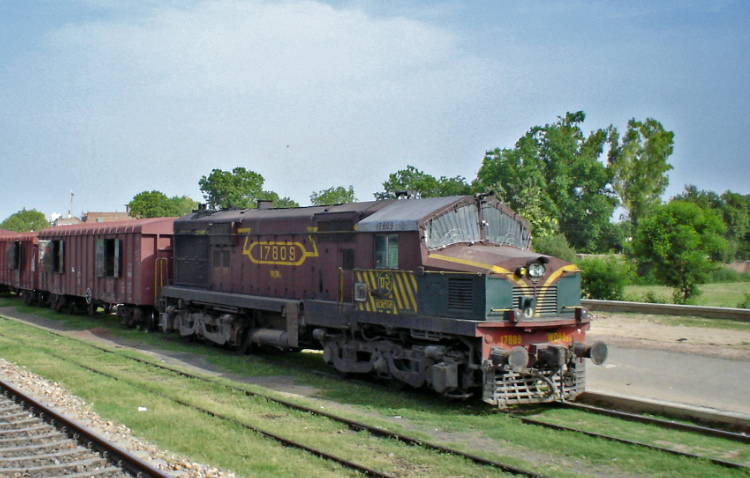
WDM-3A: From about 2000 to 2015, DCW Patiala rebuilt older WDM-2 units to class WDM-3A/WDM-2C specifications. They look very similar to WDM-2's, except for a bulge on one of the doors of the hood; this is due to the presence of a centrifugal fuel filter which moved there because the model required larger aftercoolers. There are some other slight differences in appearance. These units have a GE turbocharger and a different expressor with integral air drying facility. They have a Woodwards governor which leads to even running and idling, and (to the great disappintment of Alco smoke fans) reduces the amount of black smoke during intense acceleration. These also have roller bearings for the suspension, improving on the longstanding problem of bearing failures on the regular WDM-2 model.
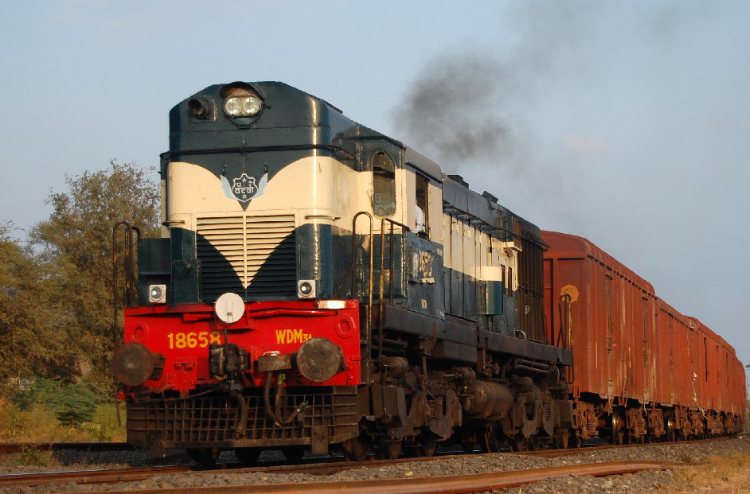
| WDM-2 Specs |
|---|
| Builders | ALCo, DLW (BLW) |
| Engine | ALCo 251-B, 16 cylinder, 2600hp with Alco 710/720/?? turbocharger. 1000rpm max, 400rpm idle; 228mm x 266mm bore/stroke; compression ratio 12.5:1. Direct fuel injection, centrifugal pump cooling system (2457l/min @ 1000rpm), fan driven by eddy current clutch (86hp @ engine rpm 1000). |
| Governor | GE 17MG8, Woodwards 8574-650 |
| Transmission | Electric, with BHEL TG 10931 AZ generator (1000rpm, 770V, 4520A) |
| Traction Motors | GE752 (original Alco models) (405hp), BHEL 4906 BZ (435hp) and 4907 AZ (435hp, with roller bearings) |
| Horsepower | 2600hp (2430hp site rating) |
| Axle Load | 18.8t |
| Bogies | Asymmetric cast frame trimount Co-Co |
| Weight | 112t |
| Starting TE | 30.4t, at adhesion 27% |
| Max. Speed | 120km/h |
| Length Over Buffers | 15862mm |
3. WDM-2G
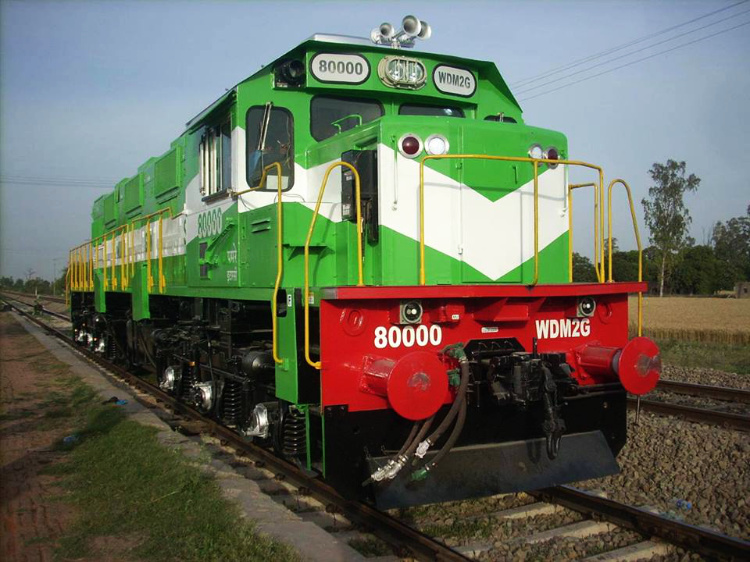
Made by DMW, Patiala, these are IR's only multi-genset locos. 3 Cummins QSK-19 6-cylinder 4-stroke engines on high-adhesion modified ALCo Co-Co bogies for a total of 2400hp. 65:18 gear ratio. 5000 litre fuel tank. Microprocessor controlled for various diagnostics and operations.
Inpsired by North American genset locos, these were designed to reduce fuel consumption and maintenance costs associated with regular large block prime movers. Only two (#80000 and #80001) were built by DMW in 2013 and feature many American design cues including the hood, marker lamps, number plates, warning bells and multi-chime horns. Initially allocated to Itarsi shed, they've since been transferred to Vatva.
This class never entered serial production because of a reduced need for lower power locomotives and extensive electrification.
| WDM-2G Specs |
|---|
| Builders | DMW, Patiala |
| Engine | 3 Cummins QSK-19, 6-cylinder, 4-stroke (each 800hp) |
| Transmission | Electric, with 740 RSL4046 alterator |
| Traction Motors | BHEL 4907 AZ |
| Horsepower | 2400hp (2150hp site rating) |
| Axle Load | 19.5t |
| Bogies | High adhesion fabricated Co-Co |
| Weight | 117t |
| Starting TE | 37 tons at 32.8% adhesion |
| Max. Speed | 120km/h (designed for 135km/h) |
| Length Over Buffers | 17350mm |
4. WDM-3
(Old class name, nothing to do with newer WDM-3A class.) These were rare diesel-hydraulic locomotives made by Henschel (model DHG2500BB), delivered between August 1970 and May 1971. Mercedes Benz MD108DZ20 engines (600-1600 RPM) on Bo-Bo bogies. 2500hp. Only a total of 8 were produced. The first two had Maybach Mekydro hydraulic transmission, while the rest of them had an indigenously developed Suri hydro-mechanical transmission. They were all based at the Gooty shed, IR numbers 18515-18522. Mainly used on freight services within SCR, though they saw some passenger train haulage in the late 1970s.
These locos were failure prone and never delivered on their promise of better fuel efficiency and lower maintenance. In fact, reports suggest a 20% higher consumption than the WDM-2. The Suri transmission also had performance issues and in 1974, all locomotives were converted to Mekydro hydraulics. They were withdrawn from active service in 1990 and scrapped in 1996.
| WDM-3 Specs |
|---|
| Builders | Henschel |
| Engine | Mercedes Benz MD108DZ20 |
| Transmission | Hydraulic; Maybach Mekydro or Suri |
| Horsepower | 2500hp |
| Axle Load | 19t |
| Bogies | Bo-Bo |
| Weight | 76t |
| Starting TE | 22 tons at 33% adhesion |
| Max. Speed | 120km/h |
| Length Over Buffers | 16234mm |
5. WDM-3A/WDM-2C
These 3100hp locos are more powerful versions of the WDM-2. The first one was delivered on August 22, 1994 by DLW. They were classified as WDM-2C, but later became WDM-3A when naming was reorganized. A total of 143 originals were built (in addition to over a 1000 rebuilt to this specification). First 57 units featured a rounded profile on the short hood (affectionately called "Baldies" by railfans). The rest of the units have the regular square profile of WDM-2. The early units also featured left-hand seating for the pilot, but later reverted to right-hand. The early versions also featured a wheel for notch control rather than the usual stalk.
ALCo 251B 16-cylinder engine, tweaked to provide 3100hp (later 3300hp), 5000 litre fuel tank, ABB or Napier turbochargers. ALCo trimount Co-Co bogies. Gear ratio 65:18 as with the WDM-2. Early units were air-braked, but many later provided with dual brake capabilities to handle freight. All are now air-braked. These locos are capable of a top speed of 120km/h.
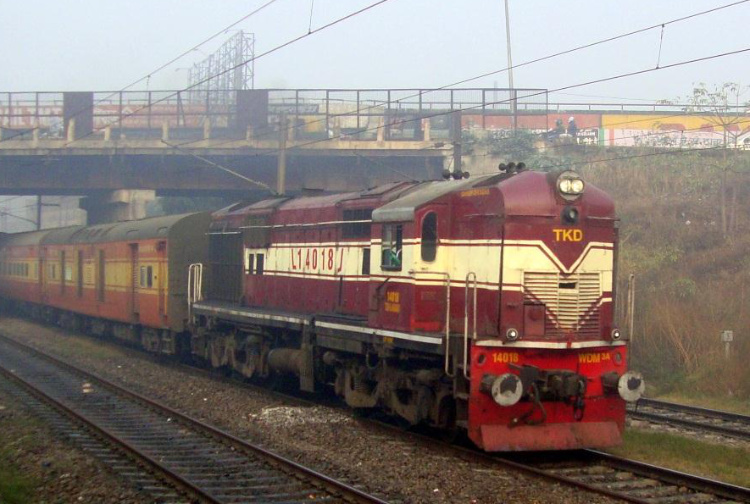
Towards the end of the 1990s, DMW Patiala started rebuilding WDM-2 locos that needed mid-life rehabilitation to the specifications of the WDM-3A (see WDM-2 above). These rebuilt locos were also classified as such. The vast majority have an "R" as a number suffix (for e.g #18555R) to indicate the rebuilt nature. These locos form the bulk of the class these days with over a 1000 of them built until 2015. Over the course of the conversions, many changes were incorporated including an updated power pack of 3300hp, relocating the dynamic brake resistor assembly to the roof of the short hood, provision of an auxiliary power unit etc. Some original WDM-3A made in the 1990s were also rebuilt in this style.
Variants:
WDM-3C: These were a short-lived, temporary class that featured an upgraded version of the ALCo 251C engine. Power increased to 3300hp. When the experiment was deemed a success, the upgraded power pack began to be installed in locos coming in for their rebuild. Confusingly, these more powerful locos retained the 3A class moniker, with the rest of the 3C's also being renamed back to 3A.
| WDM-3A Specs |
|---|
| Builders | DLW, DMW |
| Engine | Upgraded (by DLW) ALCo 251-B (16 cylinder), 3100hp (2900hp site rating) early models, 3300hp from 2003, 1050rpm max/400rpm idle; direct fuel injection. Cooling and fans as with WDM-2. ABB VTC304-15 or Napier NA 295 IR turbocharger. |
| Governor | Woodwards 8574-650 |
| Transmission | Electric, with BHEL TA 10102 CW alternator, 1050rpm, 1130V, 4400A. (Early models used BHEL TG 10931 AZ alternator) |
| Traction Motors | BHEL 4906AZ (older models), BHEL 4907AZ (newer units) |
| Horsepower | 3100hp (2900hp site rating), 3300hp (3007hp site rating) |
| Axle Load | 18.8t |
| Bogies | ALCo trimount Co-Co |
| Weight | 112.8t |
| Starting TE | 30.4t, at adhesion 27% |
| Max. Speed | 120km/h |
| Length Over Buffers | 15862mm |
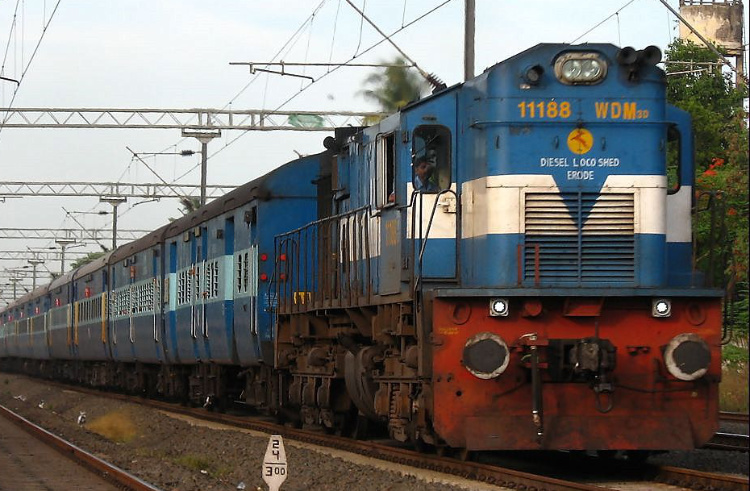
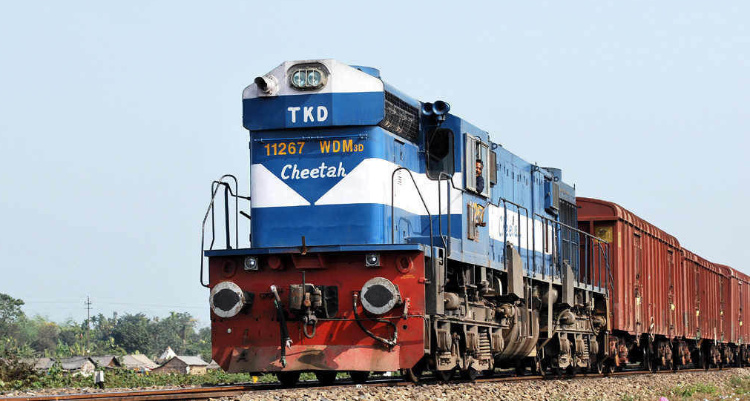
6. WDM-3D
A higher-powered version of the basic WDM-3A class, these locos have a 3300hp powerpack. The engine is an enhanced version of the 16-cylinder Alco 251C model. Max. speed 120km/h. Fabricated (welded) Alco High-Adhesion Co-Co bogies. Starting TE is 36036kgf (353kN). Lighter weight BHEL 5002 BY traction motors.
Air cylinder under footboard, WDP-4 style fuel tanks, engine doors like WDP-4, marker lights outside cabin doors, electronic horn. Improved high adhesion bogies with stem type vertical and lateral dampers in place of 'eye' type for easier maintenance. High capacity buffers. Components and auxiliaries improved with the aim of making the duty schedule longer between maintenance visits to the shed. Fuel tank capacity 6000l, engine oil sump capacity 1270l.
The WDM-3D is the result of a concerted effort by DLW to incorporate some of the best features of the GM/EMD locomotives (WDP-4/WDG-4) into the proven ALCo base technology with which DLW has enormous experience. Early versions use General Electric's 'Bright Star' microprocessor control system to monitor and control various engine parameters, to detect wheel slip, and to supply power in a phased manner to the traction motors under slipping conditions. Newer ones use a similar system from Medha Servo Drives. Early versions had the dynamic brake resistor in the short hood (like old WDM-2/3), but later ones have had it moved to the roof.
The class name 'WDM-3D' would normally imply 3400hp, however this loco is rated at 3300hp, just like the WDM-3C. Originally when this was developed, it was named WDM-3C+, but apparently IR decided that this was too confusing, and re-classified it as 'WDM-3D' to avoid confusion with the WDM-3C class.
Variants:
WDM-3B: These were a small batch of locos developed in 2005 to address certain issues with the microprocessor control in the WDM-3D. These use what IR calls 'E' Type Excitation for control and diagnostics. They share the same bogie design (high-adhesion ALCo) of the 3D, but have the lower rated engine from the WDM-3A. Only 23 were made, with many being named "Gajraj" by various sheds. All locos have since been converted to WDM-3D with updated engines.
WDM-3E: 8 of these were made around 2008. DLW squeezed out 3500hp from the ALCo 251 block, and made the bogies lighter by removing the equalizing and compensating mechanisms. Otherwise they share the rest of their design and components with the WDM-3D. Some documents redesignated this variant as "WDM-3D without equalizer" which creates confusion. Top speed restricted to 105km/h.
WDM-3F: DLW's final experiment to deliver more power from the ALCo 251 engine. These locos have 3600hp, but otherwise share the bogie design with the 3E variant noted above. Only four were made (#11287, #11321, #11325, #11342), with #11287 having a rounded, quasi-streamlined hood reminiscent of the original WDM-2C/3A. Rest of the class shares its looks with the WDM-3D. Axle load of 20t. GE 752 traction motors with the rest of the electricals also predominantly GE. Top speed restricted to 105km/h.
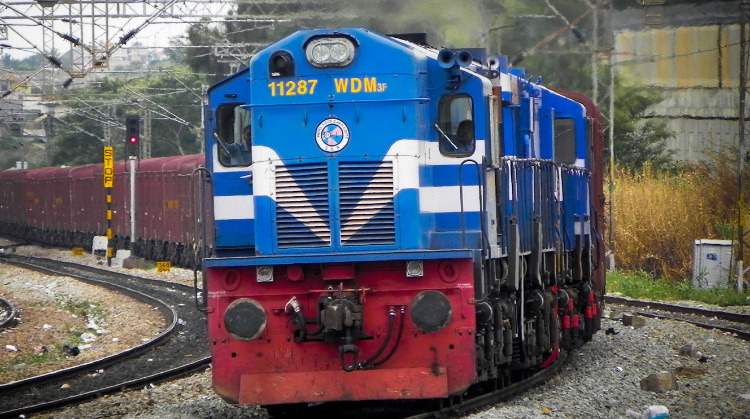
| WDM-3D Specs |
|---|
| Builders | DLW |
| Engine | Upgraded (by DLW) Alco 251-B (16 cylinder), 3300hp with GE7S1716 turbocharger, 1050rpm max/400rpm idle; 228mm x 266mm bore/stroke; compression ratio 12.5:1. Direct fuel injection, centrifugal pump cooling system (2457l/min @ 1050rpm), fan driven by eddy current clutch (90hp @ engine rpm 1050). |
| Governor | Woodwards 8574-650 |
| Transmission | Electrical, with BHEL TA 10102EV traction alternator |
| Traction Motors | BHEL 5002BY |
| Horsepower | 3300hp (3152hp site rating) |
| Axle Load | 19.5t |
| Bogies | HAHS Co-Co |
| Weight | 117t |
| Maximum TE | 38.6 tons at 33% adhesion |
| Max. Speed | 120km/h |
| Length Over Buffers | 17350mm |
7. WDM-4
(Class name carried over from old system.) There were 72 of these export model SD-24 GM-EMD locos, supplied in 1962. Rated at 2600hp and 140km/h. Co-Co, 16-cylinder 2-stroke turbo-supercharged engines. They were considered a potential alternative to the WDM-2 design from Alco and were superior in many ways, but eventually the ALCo loco won as GM did not agree to a technology transfer agreement.
They are 2-stroke engines fitted with Woodward governors. All units of IR were equipped only for vacuum brakes. Top speed generally limited to 120km/h, although they were run at 130km/h regularly for the Howrah Rajdhani, and even run in some speed trials at 145km/h. Haulage capacity 2400t. The Co-Co bogies used for this loco were Flexicoil 'Mark 1' cast steel types.
IR numbers 18000-39, 18080-111. Interestingly, the gap in serial numbers corresponds to the 40 units of this model delivered by GM to Pakistan at the same time.
All were eventually based at NR's diesel shed at Mughalsarai. The Doon Exp. was one of the first to get these locos (it was also one of the first major trains to switch from steam). Most prominently, the Howrah Rajdhani was hauled by a WDM-4 at one time, as were many other prestigious trains (AC Exp. (now Poorva), Himgiri, and Kashi-Vishwanath Exps.). Later they used to haul local area passenger trains before being withdrawn by 2000. Two have been preserved (one at NRM, one at Lucknow Diesel Shed).
| WDM-4 Specs |
|---|
| Builders | GM-EMD |
| Engine | EMD 567D3 with EMD T16 turbocharger; 835rpm max/275rpm idle; 216mm x 254mm bore/stroke; compression ratio 14.5:1. Direct fuel injection, centrifugal pump cooling system (1325l/min @ 835rpm), AC motor fan driven (82.5hp @ engine rpm 835). |
| Governor | Woodwards |
| Transmission | Electrical, with EMD D-22 generator |
| Traction Motors | EMD D47B-1 |
| Horsepower | 2600hp (site rating 2400hp) |
| Bogies | Flexicoil 'Mark 1' cast steel Co-Co |
| Weight | 112.8t |
| Maximum TE | 28.2 tons at 25% adhesion |
| Max. Speed | 130km/h (restricted to 120km/h) |
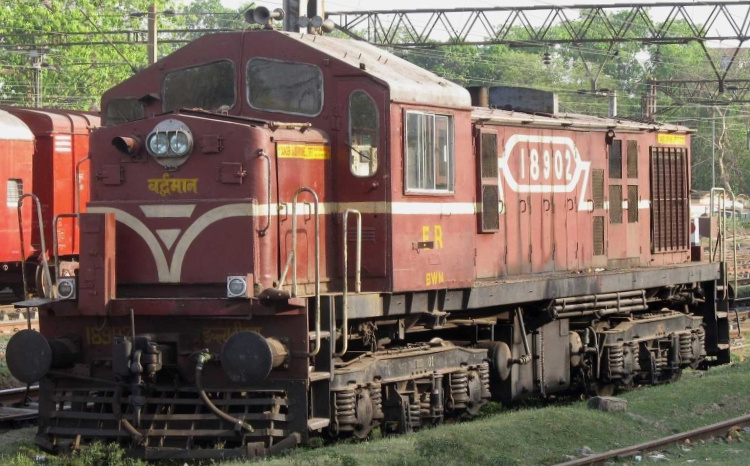
8. WDM-6
(Class name carried over from old system.) These were very rare locos! DLW built just two of them (#18901 and #18902) in July 1981 and early 1982. They had short centre-cab with a long hood and a short hood. They were 1350hp Bo-Bo locos with the same inline 6-cylinder engine (Alco 251D-6 variant) and traction motors, and hood superstructure, as the YDM-4 locos, with a WDM-2 underframe. Known as 'Maruti' or 'chutka gari' by the staff, they were based at the Burdwan shed on ER.
The power rating of the YDM-4 powerpack is too low to haul larger BG rakes, so it's not clear exactly what IR had in mind when these locos were designed and built. Perhaps they were to take on short-haul commuter and suburban services, a task which the DMUs and MEMUs are better suited. The Bo-Bo bogies of these locos were of a fabricated design, similar to those seen on the WDP-1, apparently not related to any other diesel loco bogies found on IR although perhaps loosely based on the Flexicoil models.
Both locos were withdrawn in 2011 and have been earmarked for preservation.
9. WDM-7
(Class name carried over from old system.) Fifteen of these Co-Co locos were built from June 1987 through 1989 for branch line services. They have a slightly different ALCo trimount bogie design, but share the rest of the shell design with WDM-2. The power-pack is a 12-cylinder ALCo 251B unit with an ALCo 520 turbocharger outputting ~ 2000hp. The first 10 have DC-DC transmission with BHEL 10931 generators, 105km/h top speed and no dynamic brakes (these can be spotted with no brake resistors in the short hood and cooling louvres). The rest have AC-DC transmission with BHEL 10105 alterators, dynamic brakes and limited to a top speed of 100km/h. All models had only vaccum brakes initially, but were converted to dual and finally only air brakes. 3200 litre fuel tank. Both batches have a 94:17 gear ratio.
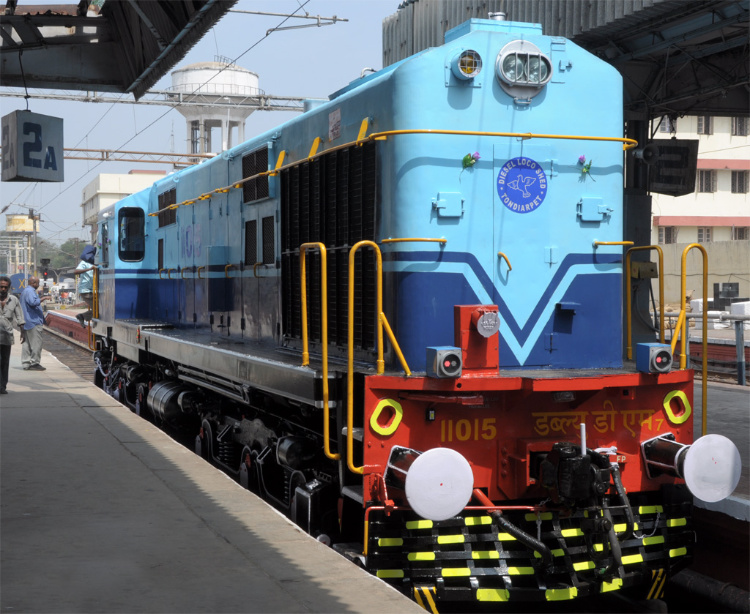
They were at Erode shed, but then were moved to Golden Rock and Ernakulam for a number of years, before finally being homed at Tondiarpet shed. They initially ran light passenger train loads, but these days are primarily used for shunting around Chennai. Two (#11003 and #11008) have been modified to run on bio-diesel.
| WDM-7 Specs |
|---|
| Builders | DLW |
| Engine | ALCo 251B, 12 cylinder, 1977hp with ALCo 520 turbocharger. 1000rpm max, 400rpm idle; 228mm x 266mm bore/stroke; compression ratio 12.5:1. Direct fuel injection, centrifugal pump cooling system (2457l/min @ 1000rpm), fan driven by eddy current clutch (86hp @ engine rpm 1000). |
| Transmission | DC-DC BHEL 10931 generator, AC-DC BHEL 10105 alternator |
| Traction Motors | BHEL 4501 AZ |
| Horsepower | 1977hp (1856hp site rating) |
| Axle Load | 16t |
| Bogies | Cast steel trimount Co-Co |
| Weight | 96t |
| Maximum TE | 25.9 tons at 27% adhesion |
| Continuous TE | 18.90 tons (DC-DC), 21.5 tons (AC-DC) |
| Max. Speed | 105 (DC-DC), 100 (AC-DC) |
Dedicated Passenger Locomotives
1. WDP-1
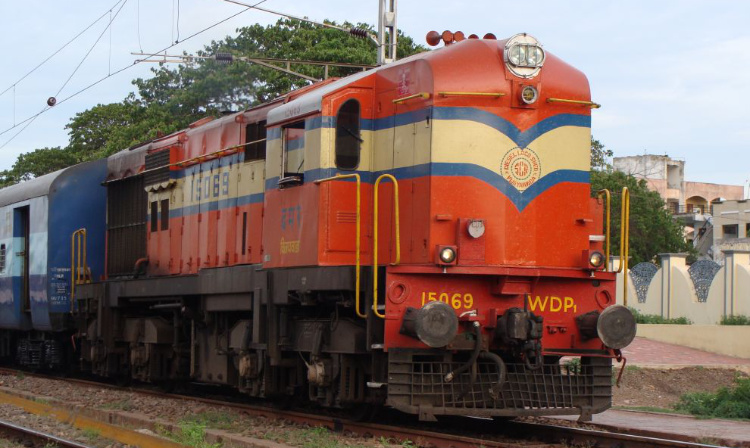
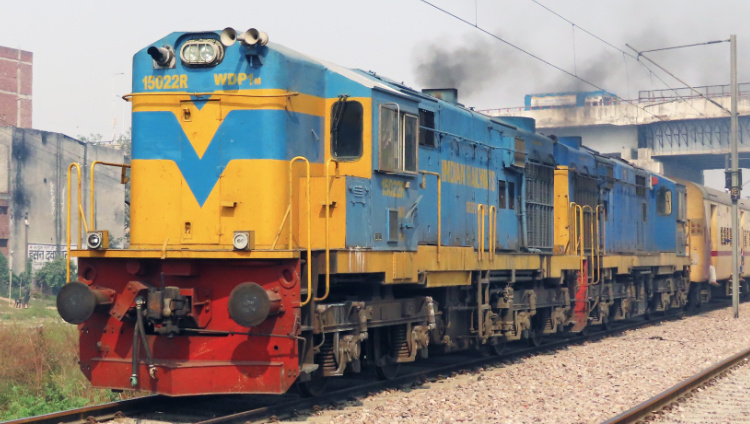
(Class name carried over from old system.) A poor adaptation of the WDM-2 intended for hauling commuter trains with small numbers of coaches, this model never performed well and has always had a lot of ride quality and maintenance problems. With a 12-cylinder engine and low overall weight, the decision was made to use a Bo-Bo wheelset for it, unsual for IR diesels. Homed at Tughlakabad and Vijaywada. Used mostly for ordinary passenger and works trains.
Rated at 2300hp. Bo-Bo fabricated bogies loosely based on the Flexicoil models. Most share the curved short hood profile of the early WDM-3A/2C. No dynamic brakes (and hence no cooling louvres for resistor grid in the short hood). Produced from April 1995, last loco on March 26, 1999.
Variants:
WDP-1M: Starting 2013, to address issues with ride quality and bogie maintenance, DMW Patiala started modifiying and rebuilding WDP-1 locos. These rebuilt ones are designated WDP-1M and feature rubber springs instead of coil springs in the primary suspension, higher capacity hydraulic dampers and modified radiators etc., These locos also have the squared off short hood profile like older WDM-2.
| WDP-1 Specs |
|---|
| Builders | DLW, DMW |
| Engine | Alco 251B 12-cylinder variant, 2300hp, with Napier NA 295 or ABB VTC304 turbocharger. 1000rpm max / 400rpm idle. Fuel injection, cooling, fans, governor as with WDM-2. 228mmx266mm bore/stroke. 13:1 compression ratio. |
| Governor | Woodward |
| Transmission | Electrical, BHEL TA 10106 AZ alternator |
| Traction Motors | BHEL 4906 AZ |
| Horsepower | 2300hp (2231hp site rating) |
| Axle Load | 20t |
| Bogies | Fabricated Bo-Bo |
| Weight | 80t |
| Max TE | 20 tons at 25% adhesion |
| Max. Speed | 120km/h |
| Length Over Buffers | 14810mm |
2. WDP-3A
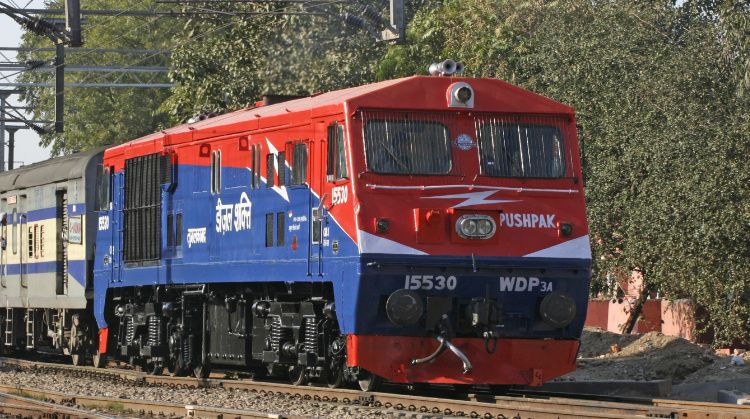
(Old class name WDP-2) 3100hp dedicated passenger loco meant for high-speed operations. Twin full-forward cabs, streamlined design, Alco 251-B V-16 power unit, with an ABB/Napier turbo supercharger and provided with an electronic governor to control the engine's power output. BHEL/CGL traction motors with 22:61 gear ratio. Rated top speed is 160km/h (in both directions). Two-stage suspension with Flexicoil Mark V fabricated bogies (Co-Co). Air-braked.
First produced in October 1998, these are IR's attempt to a build a high-speed loco on the proven ALCo platform. However, they have issues with bogie maintenance and excessive oscillations at high speed, so are restricted to 120km/h. They also have problems with less than ideal insulation in the driving cab next to the radiators, leading to crew and railfans calling them "Toasters" because of the excessive heat. They are best known for hauling the Trivandrum Rajdhani over Konkan and Western Railway at 120km/h.
They are primarily homed at Tughlakabad (NR) and Kalyan (CR). Golden Rock (SR) also had a large holding of this class, but has steadily retired its fleet and as of October 2021, stopped commercial operations. #15501 is marked for preservation. The rest are expected to be scrapped.
| WDP-3A Specs |
|---|
| Builders | DLW |
| Engine | Alco 251B 16-cylinder, 3100hp. 1050rpm max / 400rpm idle. Napier NA 295 IR or ABB VTC304-15 turbocharger. 228mm x 266mm bore/stroke, 12.5:1 compression ratio. Unit fuel injection. Cooling system has centrifugal pump with 2457l/min capacity @ 1050rpm; fan driven by an Eddy current clutch (90hp @1050 rpm). |
| Governor | Woodward |
| Transmission | Electrical, with BHEL TA 10102 BW alternator (1050rpm, 1130V, 4400A) |
| Traction Motors | BHEL 5002AZ, CGL 7362 |
| Horsepower | 3100hp (3007hp site rating) |
| Axle Load | 19.5t |
| Bogies | Fabricated Flexicoil Mark 5 Co-Co |
| Weight | 117t |
| Max TE | 29250 tons at 25% adhesion |
| Max. Speed | 160km/h |
3. WDP-4
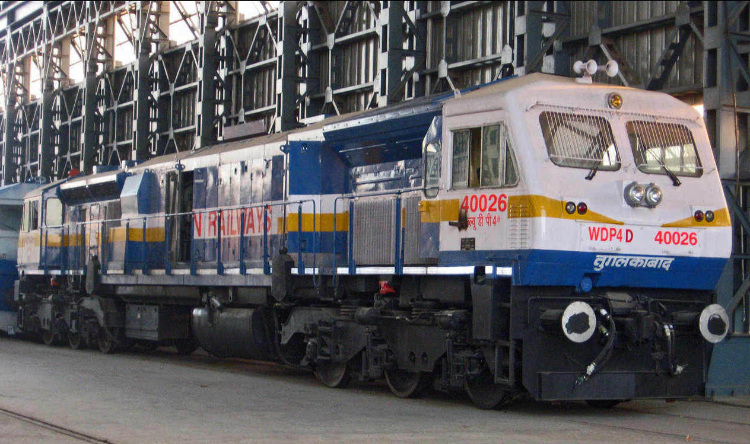
These are GM EMD GT46PAC locos. 4000hp locos with the 16-cylinder EMD 16-710 (16-V-710G3B-EC) turbocharged engines (AC-AC transmission) with unit fuel injection. The bogies are GM's light-weight cast HTSC bogies similar to those of WDG-4 locos (see below) but meant for passenger use. They have an interesting Bo1-1Bo wheel arrangement. Max. speed 160km/h, although in trials it has been reported to have run at 180km/h. Early versions had the EM2000 microprocessor systems for diagnostics and control, though later units have Siemens and Medha systems. Electro-pnuematic Knorr (NYAB) computer control brakes with fully blended dynamic and air brakes. Two GE traction control convertors (one per bogie) with GTO. #20040 homed at KJM shed is the first IGBT based WDP-4. The traction conversion system was supplied by Siemens.
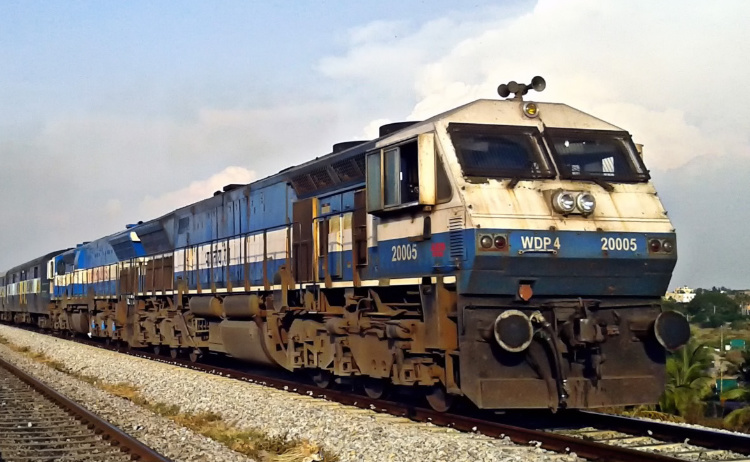
Starting in June 2001, 10 of them (#20000 to #20009) were provided by GM, operating out of Hubli (but frequently seen at Guntakal, Gooty, Bangalore and Secunderabad). In April 2002 DLW started producing these locomotives with 20011, 20013 and 20014 being assembled from completely knocked down kits. 20012 was the first indigenously manufactured WDP-4 and features a modified fibre glass shell over the standard cab. DLW had plans only for these 5 in its first production batch, but started to produce them in large numbers starting in late 2003.
These locomotives have received criticsm for being difficult to drive long hood leading because of visibility issues due to the radiator design. In order to address this, some locos have a widened cab profile similar to the WDP-4B (see below).
| WDP-4 Specs |
|---|
| Builders | GM-EMD, DLW |
| Engine | GM-EMD 16-710G3B; 16-cylinder, 2-stroke; 4000hp; 230 x 279mm bore/stroke, 16:1 compression ratio. 904 rpm max / 200 rpm idle. |
| Governor | Woodward |
| Transmission | Electric (AC - AC), with GM TA-17 traction alternator (CA-6B companion alternator) |
| Traction Motors | Siemens 1TB-2622-0TB02; 3-phase AC induction, axle hung, force air ventilated |
| Horsepower | 4000hp (3939hp site rating) |
| Axle Load | 19.5t |
| Bogies | EMD high adhesion HTSC Bo1-1Bo |
| Weight | 115.8t |
| Starting TE | 27.5 tons at 35% adhesion |
| Max. Speed | 160km/h |
| Length Over Buffers | 19964mm |
4. WDP-4B
Although the class designation makes it seem like a minor variant of the WDP-4 class, it has significant differences from it, being much closer to the WDG-4 class. The WDP-4B has 6 AC Siemens or EMD traction motors (Co-Co), an uprated GM-EMD 16-710 engine putting out 4500hp. Gear ratio of 17:77. Axle load of 20.2t. The WDP-4B also has a widened cab profile to enable better visibility in long hood leading operations (a complaint often associated with the WDP-4). Braking system similar to WDP-4.
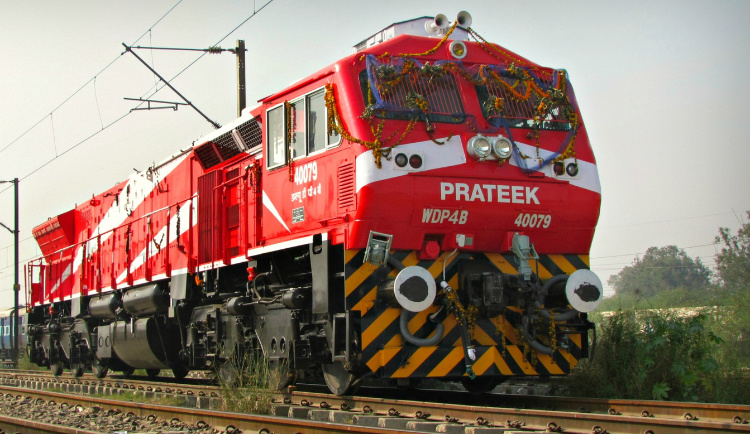
These locos were developed to address the relatively poor performance of the WDP-4 when hauling 24-coach trains on heavily graded sections. With 6 traction motors and a starting tractive effort of 40.7 tons, these perform much better in such conditions. Maximum speed is 150km/h, though operationally they run at 130km/h over certain sections of NR, NCR and WR etc. Initially two prototypes of the WDP-4B class were built using components for the WDP-4 class loco (#20047, #20075 - in the number series for the WDP-4 class). Serial production of these locos began in March 2010.
Many of the newer units have traction convertor control systems from Medha Servo Drives in which each motor has a convertor, rather than per bogie in systems made by Siemens or EMD. The advantage is that in case of failure of one or motors, others are still available, allowing the loco to reach its destination under reduced power. The control software has also been changed so as to squeeze out power at the top end of each traction motor under most conditions, unlike with the WDP-4 where the software was more constraining in terms of when it would allow maximum power to be drawn. The WDP-4B also has a provision for an inverter-driven head-end power unit, allowing running trains without a generating car (EOG) for hotel power, though these are not in use after experiments failed.
| WDP-4B Specs |
|---|
| Builders | DLW |
| Engine | Updated GM-EMD 16-710G3B; 16-cylinder, 2-stroke; 4500hp; 230 x 279mm bore/stroke, 16:1 compression ratio. 904 rpm max / 200 rpm idle. |
| Governor | Woodward |
| Transmission | Electric (AC - AC), with GM TA-17 traction alternator (CA-6B companion alternator) |
| Traction Motors | Siemens 1TB2622- 0TA02, EMD A 2916-8 |
| Horsepower | 4500hp (4400hp site rating) |
| Axle Load | 20.2t |
| Bogies | EMD high adhesion HTSC Co-Co |
| Weight | 121.2t |
| Starting TE | 40.7 tons |
| Max. Speed | 150km/h design speed, 130km/h operational |
| Length Over Buffers | 19964mm |
5. WDP-4D
These are dual-cab versions of the WDP-4B. The "4D" designation indicates dual cabs rather an increase in power over the base model. They share the same engine and other mechanical components with the WDP-4B. In addition to EMD and Siemens, traction motors for the WDP-4D are also supplied by Medha, BHEL (IM4507BZ) and Yongji (YJ157A). The two cabs are of unequal length – CAB-1 is 2377mm while CAB-2 (the radiator end) is 2232mm. This was done so as to keep within acceptable schedule of dimension limits on IR. These locomotives were designed to solve the persistent issue of visibility in the EMD locos when long hood leading. While the WDP-4B mitigated the issue with a widened cab, IR felt the problem needed a more permanent solution, and hence the WDP-4D.
Weight of the loco increases to 123 tons, with a corresponding marginal increase in axle load to 20.5 tons. Length over buffers is 23002mm. Cabs in later units are air-conditioned. They also feature a redesigned control stand by Medha with LCD displays and touch controls for certain functions (shared with the WDG-4D). Many locos also have GSM-R and GPS antennae to relay critical info and location data for use by maintenance and signalling staff.
For other specifications, please check the WDP-4B class above.
Dedicated Freight Locomotives
1. WDG-3A/WDG-2
(Old class name was WDG-2, new class name is WDG-3A.) This 3100hp model was developed in response to problem areas noted with the WDM-2, such as ride quality, lateral oscillations, and poor traction with heavy loads, especially under single unit working. This loco formed the backbone of diesel freight operations for close to a decade until the WDG-4 class took over. The updated power pack (designated 251B) was the first attempt by DLW to squeeze out more power from the ALCo 251 block. Better turbochargers (Napier or ABB) and large after coolers were incorporated to deliver the gains. Early models had BHEL 4906AZ traction motors, later ones had 4907AZ with roller suspension bearings. Some locos also feature Hirect self-cooled rectifiers. 74:18 gear ratio. High adhesion fabricated Co-Co bogies with two-stage suspension. Balancing speed of 69km/h with a 58 BOXN wagon load. Max. speed 100km/h.
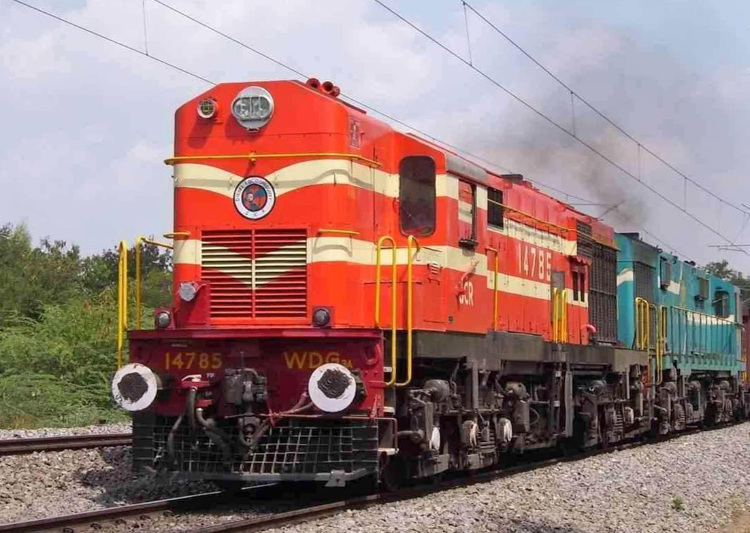
The first loco was delivered on July 17, 1995. Early versions had a rounded short hood profile, left-hand side driving, notch control via a wheel rather than stalk. Later versions reverted many of these changes to WDM-2 design. Newer units (1495x onwards) have microprocessor controlled governors and diagnostics. The first such, #14951 ('Garuda') was homed at Gooty. Models from 2009 onwards (and some rebuilt ones) feature dynamic brake resistors on the roof, an auxillary power unit in the short hood etc. making their appearance more like the WDM-3D.
Production of this class stopped in 2015 in favour of more EMD (WDG-4, WDG-4D) locos. Many have been scrapped in the past few years or sold to industrial customers. Some locos nearing their midlife were rebuilt into electric locos by utilising the shell, traction motors and other electrical systems. These are designated WGAC-3.
Variants:
WDG-3C: A possible one off (only #14962 has been spotted, plate DG-3A-465, May, 2002) with a 3300hp power pack. Featuring a dark red livery, this loco is homed at Katni shed. In 2011, had engine derated to 2600hp and was redesginated to WDG-3A.
WDG-3D: Another one off with a possible 3400hp power pack. Only one, #13301, existed (at Vatva shed). Microprocessor governor, creep control, improved cab ergonomics. Improved components and auxiliaries geared towards a longer period between scheduled maintenance jobs. Has since been redesignated WDG-3A with a corresponding decrease in engine power.
| WDG-3A Specs |
|---|
| Builders | DLW |
| Engine | Upgraded (by DLW) Alco 251-B (16 cylinder), 3100hp (3007hp site rating), 1050rpm max/400rpm idle; direct fuel injection. Cooling and fans as with WDM-3A. ABB VTC304-15, Napier NA 295IR or GE7S 1716 turbocharger |
| Governor | Woodward |
| Transmission | Electric, with BHEL TA 10102 CW alternator (1050rpm, 1130V, 4400A) |
| Traction Motors | BHEL 4906AZ/4906BZ/4907AZ/4907BZ |
| Horsepower | 3100hp (3007hp site rating) |
| Axle Load | 20.5t |
| Bogies | High-adhesion fabricated Co-Co |
| Weight | 123t |
| Starting TE | 40.6 tons at 33% adhesion |
| Max. Speed | 100km/h |
| Length Over Buffers | 17850mm |
2. WDG-4
GM-EMD GT46MAC model dedicated freight locos introduced in 1999. GM-EMD 16-710 G3B engine with EMD 'G' turbocharger developing 4000hp (later models 4500hp), HTSC Co-Co bogies, 3-phase AC traction motors from Siemens originally, later models had EMD and BHEL. Original gear ratio 85:16, later 90:17. Axle load 21 tonnes. Max. speed is 100km/h. Early versions had GTO based Siemens SIBAS 16 traction control systems. Newer ones have IGBT based control from Medha and EMD. All locos feature a slip-control, with an electronic air brake system (KNORR-NYAB).
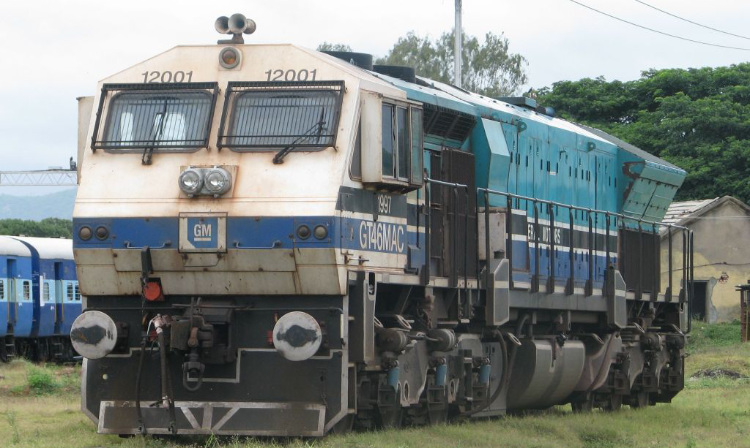
The first units from GM were #12001-12013 manufactured between 07/97 and 09/98; followed by a second order (#12014-12021) manufactured around 12/98. They were first allocated to Hubli shed to handle the heavy ore rakes from the mines around Hospet. DLW started serial production in 2002 with a great number made over the years. WDG-4 (and its dual cab WDG-4D variant) form the bulk of IR's diesel freight operations these days. They can start a load of 58 BOXN wagons on a 1 in 150 grade and have a balancing speed of 85km/h for such a load on level track.
Newer units have a widened cab profile to address visibility issues while long hood leading. They also have a redesigned control desk featuring LCD panels and touch interfaces for diagnostics and control.
| WDG-4 Specs |
|---|
| Builders | GM-EMD, DLW |
| Engine | GM-EMD 16-710G3B; 16-cylinder, 2-stroke; 4000hp (later updated to 4500hp); EMD 'G' turbocharger; 230 x 279mm bore/stroke, 16:1 compression ratio. 904 rpm max / 200 rpm idle |
| Governor | Woodward |
| Transmission | Electric (AC - AC), with GM TA-17 traction alternator (CA-6B companion alternator) |
| Traction Motors | Siemens 1TB2622-0TA02, Siemens 1TB2525, EMD A2916-8 |
| Horsepower | 4000hp (original), 4500hp (updated) |
| Axle Load | 21t |
| Bogies | EMD high adhesion HTSC Co-Co |
| Weight | 126t |
| Starting TE | 55 tons at 41% adhesion |
| Max. Speed | 100km/h |
| Length Over Buffers | 19964mm |
3. WDG-4D
Dual cab variant of the WDG-4 with large changes. All locos in this class have the updated EMD 710G3B engine putting out 4500hp. Fully IGBT based traction control from Siemens, Medha and EMD. Max speed of 105 km/h. 21t axle load. Loco weight 130.2t. Maximum TE is 55 tons at 41% adhesion. Traction motors from Siemens, EMD, BHEL and Yongji. Alternators from EMD and BHEL.
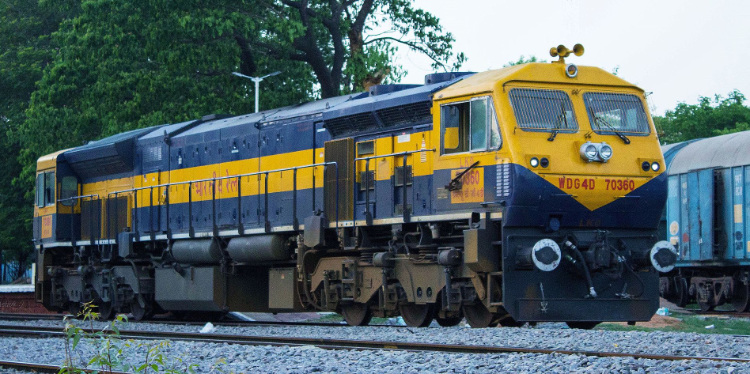
This class was developed alongside the passenger operations oriented WDP-4D to address visibility concerns when driving long hood leading. Cabs are of unequal length to conform to schedule of moving dimensions and feature a redesigned control desk from Medha. Most locos are in a deep blue, yellow band with yellow cabs livery. Locos equipped with Medha systems have individual traction control convertors for their motors while EMD and Siemens systems have one per bogie. The first prototype was manufactured in 2012 (plate no. WDG-4-668, running no. 12681) and assigned to Sabarmati shed. Serial production started in 2014 with running numbers beginning from 703xx onwards. Production stopped in 2017 on account of increased electrification and the commissioning of next generation GE locos.
For other specifications, please check the WDG-4 class above.
4. WDG-4G
Dual cab freight locomotives based on GE's Evolution series, model ES43ACmi. Fully electronic fuel injected 12-cylinder, 4-stroke, 4500hp GEVO tier-1 engine meeting UIC-1 emission control norms. Light weight Co-Co bogies with 3-phase AC traction motors. Individual traction motor control via IGBT based convertor. 22t axle load; 132t loco weight; 6300l fuel tank. Starting TE of 544kN. Max. speed of 100km/h.
WDG-4G locos have a crash hardened data logger. Cabs are built of fire retardant materials and to EN12663 frontal collision specifications. They also feature fire extinguishers. Locos are equipped with GSM-R and GPS antennae for live remote monitoring of systems and location. They also feature enhanced crew comfort facilities like climate control, heated windshields, hot plates (for reheating food), water closet, better sound proofing and charging sockets for electronics.
These locos are built by the Diesel Loco Factory in Marhowra, Bihar, a joint venture between the Government of India and GE Transportation. The first 50 were imported from GE's Eerie, Pennsylvania, USA plant starting October 2017. GE plans to deliver 700 of these locos in total until 2029 and will also handle maintenance of them for 13 years. WDG-4G locos are homed at Roza (NR) and Gandhidham (WR) sheds.
5. WDG-5
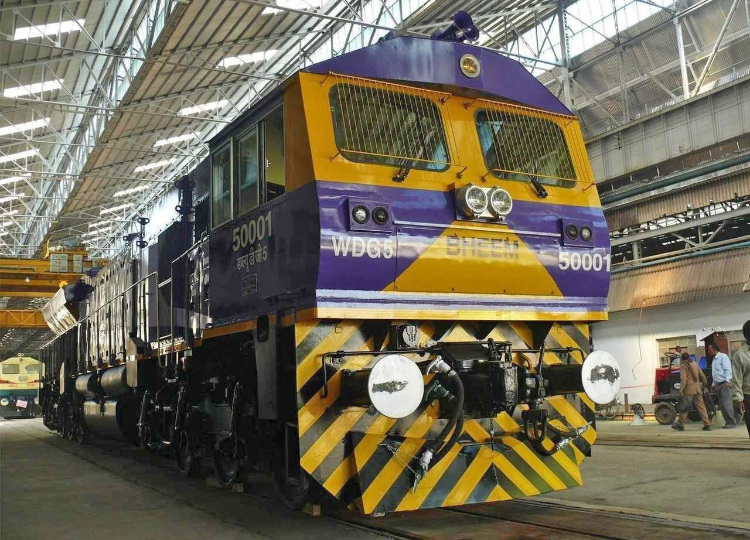
Heavy haul freight locomotives based on EMD's SD80MAC. 710G3B-ES turbocharged 20-cylinder, 2-stroke engine with 5500hp output. These locos feature a fully AC transmission with 3-phase AC traction motors (EMD A2921-6). Gear ratio 91:20; HTSC fabricated Co-Co bogies; Loco weight 133.8t; Axle load of 22.3t; 7500l fuel tank. Starting TE of 560kN with a maximum speed of 90km/h. Traction convertors and switch gear is located in a single housing called "E-locker" for easier maintenance. Cabs are EN12667 crash compliant, feature TFT screens for diagnostics display, roof mounted air-conditioning and heating. Unusually for IR locos, they also have a toilet.
Only 7 were produced between 2012 and 2016. Class is named "Bheem" after a Hindu mythological character. The first one was at Lucknow shed, but all of them are now at Sabarmati (WR). Poor fuel efficiency of the prime mover meant this loco never entered serial production.
6. WDG-6G
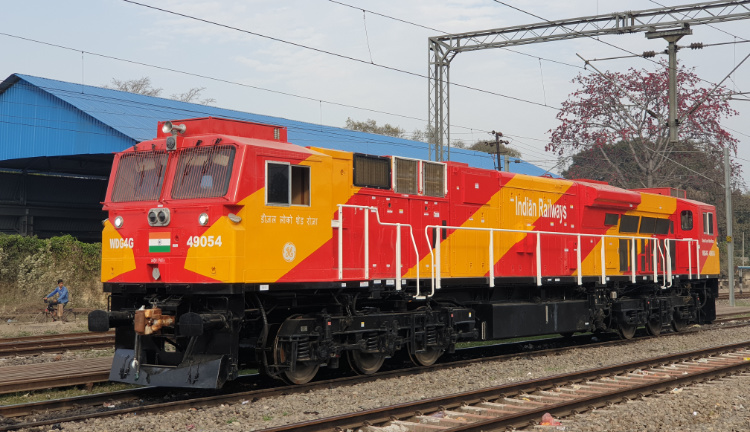
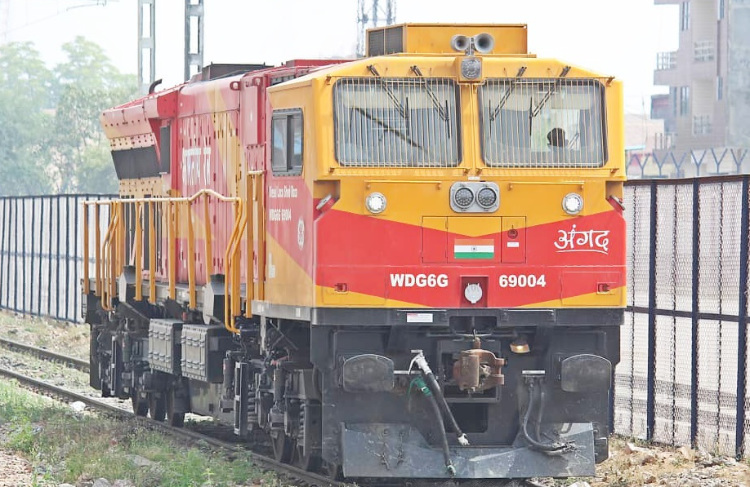
These are the most powerful diesel locomotives on IR. GEVO 16-cylinder, 4-stroke engine producing 6000hp. Fully electronic fuel injected and meeting UIC-I emmission control norms. Unlike their WDG-4G GE counterparts, these are single cab only. HTSC Co-Co bogies with 3-phase AC traction motors, individually controlled by IGBT based convertors. 23t axle load; 8350l fuel tank; 570kN starting tractive effort. Max speed of 65 km/h though designed for 100km/h.
Like their lesser power counterparts these also have crash hardened real time data loggers with remote monitoring, climate control, hot plates and other crew comforts in the cab etc,. They also have a toilet. The first two were imported from GE's Erie, Pennsylvania plant in early 2019. They were then sent to Maula Ali shed in June 2019 for confirmatory oscillograph car tests between Parli and Vikarabad on the SCR.
300 of these locos will be manufactured in total at GE's Marhowra joint venture plant. GE will also provide maintenance for these locos for 13 years as per the agreement. All locos will be homed at either Roza or Gandhidham and primarily be deployed on the DFCs. IR numbering series 69xxx.
Shunting Locomotives
1. WDS-1
These are significant as the first widely deployed and successful diesel locos in India. The original locos of this class were a batch of 15 built by GE and supplied by USATC in 1944-45. Bo-Bo, twin 8-cylinder 4-stroke engines, 2 x 190hp. They had centre cabs and short and narrow hoods on either side, with two powerpacks (one under each hood). Most of these were with WR, although three units went to ER in 1945. They were very quiet in operation (in contrast to the WDS-2 locos, see below.) Some were working up till 1990 or so, when most were withdrawn or scrapped. One of them is preseved at DLW.
| WDS-1 Specs |
|---|
| Builders | GE |
| Engine | Turbocharged 8-cylinder, 4-stroke |
| Transmission | Generator (make unknown) |
| Horsepower | 386hp total |
| Bogies | Bo-Bo |
| Weight | 41t |
| Starting TE | 11.5t |
| Max. Speed | 56km/h |
2. WDS-2
Krauss-Maffei supplied these o-C-o bogie diesel-hydraulic locos in 1954-1955. 8-cylinder 4-stroke turbo-supercharged engine (MAN W8V-17.5/22A) with a Voith L37-V hydraulic transmission, delivering 440hp. Single cab placed asymmetrically (one hood short, one long). Most of these were with CR, and were known for being assigned to haul the 'Garbage Special' trains from Mahalaxmi to Chembur. These were very noisy in operation. Axle load 17.3t. They were all scrapped in the 90s. None has been preserved.
| WDS-2 Specs |
|---|
| Builders | Krauss-Maffei |
| Engine | MAN W8V-17.5/22A |
| Transmission | Hydraulic, Voith L37-V |
| Horsepower | 440hp |
| Axle Load | 17.3t |
| Bogies | o-C-o |
| Weight | 46t |
| Starting TE | 15.4t |
3. WDS-3
Built by Mak GmbH in 1961, these are o-C-o bogie locos, with Maybach MD-435 8-cylinder 4-stroke turbo-supercharged engines. 618hp. Side rod drives with Suri hydro mechanical transmission. Air brakes for loco, vacuum for train. These were all rebuilt with new engines and transmissions and reclassified as WDS-4C in 1976-1978. Max. speed of 65km/h for mainline and 27km/h for shunting.
| WDS-3 Specs |
|---|
| Builders | Mak GmbH |
| Engine | Maybach MD-435 |
| Governor | Maybach R321 |
| Transmission | Suri Hydro-Mechanical |
| Horsepower | 618hp |
| Axle Load | 19t |
| Bogies | o-C-o |
| Weight | 57t |
| Max. TE | 17.1t (shunting), 10.4t (mainline) both at 30% adhesion |
| Max. Speed | 65km/h (mainline), 27km/h (shunting) |
| Length Over Buffers | 10700mm |
4. WDS-4
CLW produced some of these diesel-hydraulic locos beginning in 1967-1968, but bulk production began only in 1969. (Some of the later units were probably built at the Diesel Loco Works, Varanasi.) Wheel arrangement: 'C'. 6-cylinder 4-stroke turbo-supercharged engines, initially MaK made, but later CLW. WDS-4 models are rated at 600hp, WDS-4A at 660hp, and WDS-4B at 700hp. (The same power-pack is used on all the models, upgraded for each.)
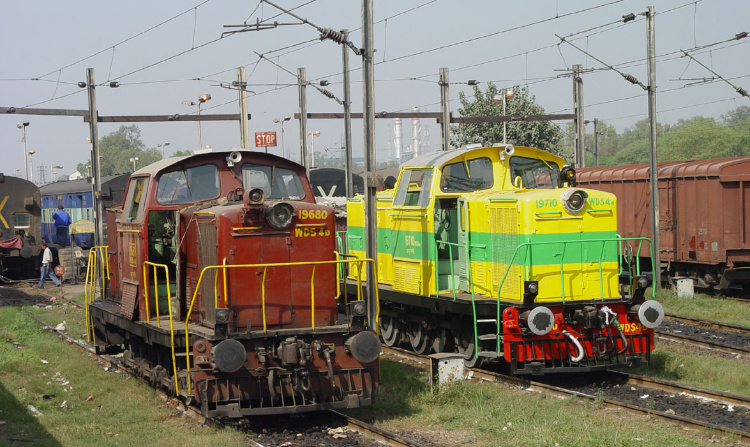
Many of these were used by public-sector units and some private companies for industrial uses. They were for long the most common shunters on IR, before being replaced by WDS-6s because of their lack of power in handling increasingly longer and heavier passenger rakes. Except for a few units based in Kashmir (and used as snow ploughs), they have all been withdrawn from IR. The first WDS-4A, #19057, named 'Indraprastha', was homed at Shakurbasti for a long time (until 2005) but was decommissioned and sent to the Regional Rail Museum at Howrah. WDS-4B numbers are shared in a range with WDS-4D locos.
Variants:
WDS-4A: Engine rated at 660hp. Voith hydraulic transmission.
WDS-4B: Engine rated at 700hp. Suri hydromechanical transmission.
WDS-4D: Engine rated at 700hp. Voith/KPC hydraulic transmission.
| WDS-4 Specs |
|---|
| Builders | CLW |
| Engine | Mak/CLW 6M 282 A(K); Uprated for each variant |
| Governor | Suri-MaK |
| Transmission | Suri Hydro Mechanical (4), Voith Hydraulic (4A), Suri Hydro Mechanical (4B), Voith/KPC Hydraulic (4D) |
| Horsepower | 600hp (4), 660hp (4A), 700hp (4B and 4D) |
| Axle Load | 20t |
| Bogies | C |
| Weight | 60t |
| Max. TE | 18t (shunting), 9.5t (mainline), both at 30% adhesion |
| Max. Speed | 65km/h (mainline), 27km/h (shunting) |
| Length Over Buffers | 11000mm |
5. WDS-4C
Rebuilt WDS-3 locos with new engines (Mak/CLW 6M 282 A(K), 700hp) and Suri hydromechanical transmission, etc. in 1976-1978.
6. WDS-5
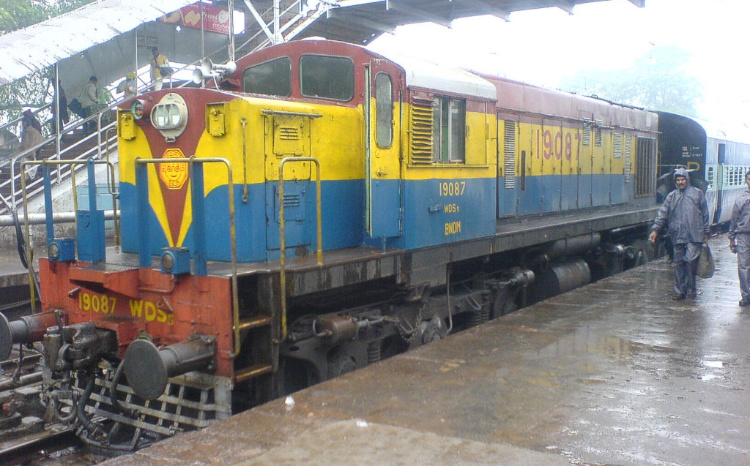
Large Co-Co shunter based on ALCo DL-535D. 21 were delivered to DLW in 1967 in kit form and assembled there. ALCo 251-B, 6-cylinder, 4-stroke engine putting out 1065hp. They have a flat-ended cab on one end. Round fuel tank instead of the integrated body ones found in the later WDS-6 model. As of October 2021, all of IR's units have been scrapped. During active duties, they were found at Bondamunda (SER) and Pt. DD Upadhyaya Junction (Mughalsarai, ECR). Many were also sold to industrial customers.
| WDS-5 Specs |
|---|
| Builders | ALCo, DLW |
| Engine | ALCo 251B, 6 cylinder, 1065hp with ALCo 320F turbocharger. 1025rpm max, 375rpm idle; 228mm x 266mm bore/stroke; compression ratio 12.5:1. Direct fuel injection, centrifugal pump cooling system (1266/min @ 1025rpm), fan driven by eddy current clutch (45hp @ engine rpm 1025) |
| Governor | Woodward |
| Transmission | Electric, GE GT551E2 generator (1050rpm, 965V, 2500A) |
| Traction Motors | GE 752E6 |
| Horsepower | 1065hp (994hp site rating) |
| Axle Load | 21t |
| Bogies | ALCo trimount Co-Co |
| Weight | 126t |
| Starting TE | 31.5 tons at 25% adhesion |
| Max. Speed | 109km/h |
| Length Over Buffers | 16322mm |
7. WDS-6
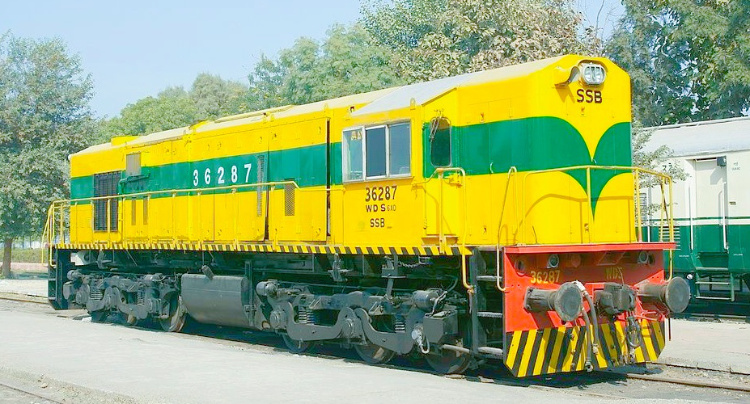
Heavy-haul shunters made originally for industrial customers, but has since become the most common type of diesel shunter on IR. First produced in 1975. 6-cylinder 4-stroke incline ALCo 251B engine from the YDM-4 mated to the Co-Co trimount bogie and under-frame from WDM-2. 1400hp gross. Max. speed 62.5km/h (though can be updated to 71km/h using 65:18 gearing). Several of them have a so-called 'creep control' system which allows them to be operated at a sustained speed of between 1 to 7 km/h for hauling special or heavy loads. Initial production was by DLW, though in the past decade or so, the Parel Workshops on CR have also been making them from kits supplied by DLW.
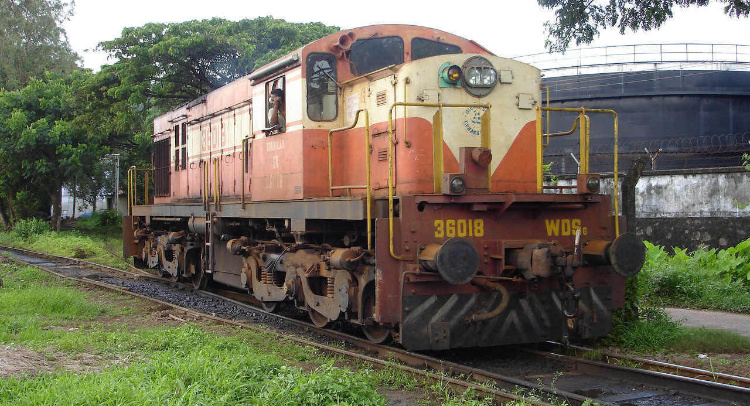
The first ten were numbered #19459-#19468 but later renumbered as they were all allocated to public-sector industrial concerns. (The same numbers were later allotted to WDS-4 units.) Units built for IR were numbered 36000 and above. Given the large numbers and length of time in which they were produced, there are a few variants, the most significant among them, the WDS-6AD featuring AC-DC transmission, high adhesion bogies, shell like WDM-3D etc. (more below). WDS-6R are thought to be old WDM-2, but fitted with the smaller 6-cylinder engine, AC-DC transmission, 'creep control' etc. and re-classified.
In 2008, RDSO briefly examined building this class with a Cummins KTA 50L engine to reduce costs and help smaller workshops produce them, but nothing seems to have come out of it.
Variants:
WDS-6AD: The most significant variant of the WDS-6. These are lighter by 13t over the original, but have higher adhesion capabilities due a revised bogie. AC-DC traction, microprocessor controlled governor and other diagnostics, cab and shell design like the WDM-3D. Some recent units have an auxiliary power unit. Other WDM-3D like features: larger fuel tank, sandboxes, solid cow catcher and air reservoirs. Many also feature full length grab rails along both hoods.
| WDS-6 Specs |
|---|
| Builders | DLW, Parel Workshops |
| Engine | ALCo 251D, inline 6 cylinder, 1400hp with ALCo 350F turbocharger. 1100rpm max, 400rpm idle; 228mm x 266mm bore/stroke; compression ratio 12.5:1. Direct fuel injection, centrifugal pump cooling system (1360/min @ 1100rpm), fan driven by eddy current clutch (41.5hp @ engine rpm 1100) |
| Governor | Woodward |
| Transmission | Electric, BHEL TG10919AZ generator |
| Traction Motors | BHEL 165 |
| Horsepower | 1400hp (1300hp site rating) |
| Axle Load | 21t |
| Bogies | Co-Co |
| Weight | 126t |
| Starting TE | 34 tons at 27% adhesion |
| Max. Speed | 62.5km/h |
| Length Over Buffers | 15920mm |
8. WCDS-6
C'='Converted'. These were MG locomotives (YDM-4) converted by Golden Rock Workshops to broad gauge by swapping in BG bogies and underframes. The power-pack, radiator, generator, and electrical controls are retained from the MG loco; new water and air lines were added. The modified engines have an improved control stand and a dual-brake system. These locos are targeted at large industrial concerns. The first one was delivered on April 1, 2009 by Golden Rock to RITES. It is not known whether more were produced or if later versions were rebadged as WDS-6R (as mentioned above).
9. WDS-8
Only five of these were made, and all were transferred to SAIL (Steel Authority of India Ltd.) and have no IR numbers. MaK 800hp diesel engine. Bo-Bo, DC-DC traction. 22t starting TE. Made between 1979 and 1982. Short full-width cab and single long, narrow hood. The cab appears to have been the same design as used for some of CLW's electric locos. All of them have been scrapped.
10. DLW Works Shunters
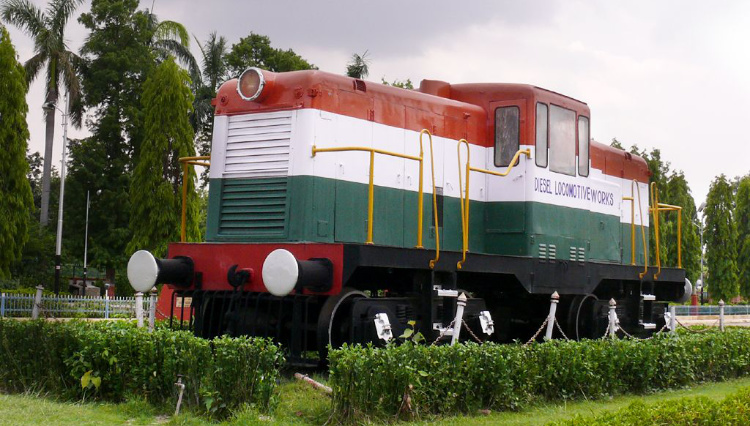
DLW built a few low-power (250 hp??) diesel-hydraulic works shunters for use at ICF, CLW, and DLW. Three were built for BG in 1966-67, and two more with the same equipment for MG in 1967 or so. Of the two MG units, one was later converted to BG. It is unknown whether there was another MG unit which would account for a skip in serial numbers. #19053 was used at DLW itself, #19054 at ICF, and #19055 at CLW.
Electric locomotives are powered by overhead electric lines or third rail systems. They are known for their high efficiency, faster acceleration, and lower emissions.
Mixed Use Locomotives
Introduced between 1959 and 1960, these were the first AC electrics on IR. Made by the 50 Cycles European Group, 100 of these were delivered. They were mostly deployed by ER in the Howrah-Asansol-Dhanbad-Mughalsarai section. They were less frequently found 'upstream' in the Delhi-Kanpur-Mughalsarai section, and in the Igatpuri-Bhusaval section of the Central Railway. Mostly used for non-express passenger trains, but some were used double-headed for freight service. Some were still in operation on ER (Sealdah-Lalgola passenger, etc.) even in the late 1990s. All of them have been withdrawn from service. One is preserved at the NRM (#20202, 'Jagjivan Ram').
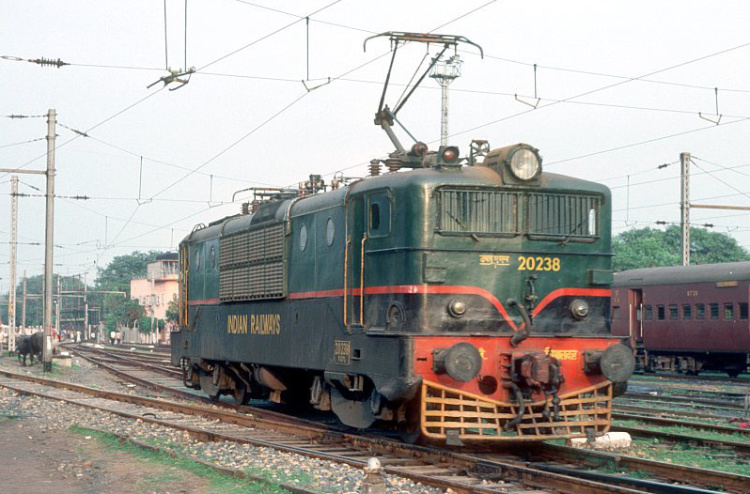
2830hp. B-B (monomotor bogies). Ignitron rectifiers feeding four DC traction motors accepting pulsating current input. Motors are connected to the axles by a Jacquemin drive. Speed control by tap-changer on input transformer (motors permanently wired in parallel). Superstructure mounted on bogies with pendular suspension with equalizer beams. Electricals from ACEC, AEG, Alstom, Brown Boveri, Siemens and others. Jeumont transformer (20 taps), Oerlikon exhauster, Arno rotary converter. Air loco brakes, vacuum train brakes.
| WAM-1 Specs |
|---|
| Builders | 50 Cycles European Group (Kraus-Maffei, Krupp, SFAC, La Brugeoise & Nivelle) |
| Traction Motors | Siemens/ACEC/Alstom MG 710A (740hp, 1250V, 480A, 1000 rpm, weight 2750kg). Fully suspended, force-ventilated. |
| Gear Ratio | 16:65 |
| Transformer | Jeumont BOT 3000 |
| Rectifiers | Four water-cooled ignitrons from SGT, each rated for 575kW/1250V |
| Pantographs | Two Faiveley AM-12 |
| Horsepower | 2830hp continuous |
| Axle Load | 18.64t |
| Bogies | B-B (Monomotor) |
| Weight | 74t |
| Starting TE | 25 tons at 33.3% adhesion |
| Continuous TE | 14.8 tons |
| Max. Speed | 112km/h |
| Length Over Buffers | 15892mm |
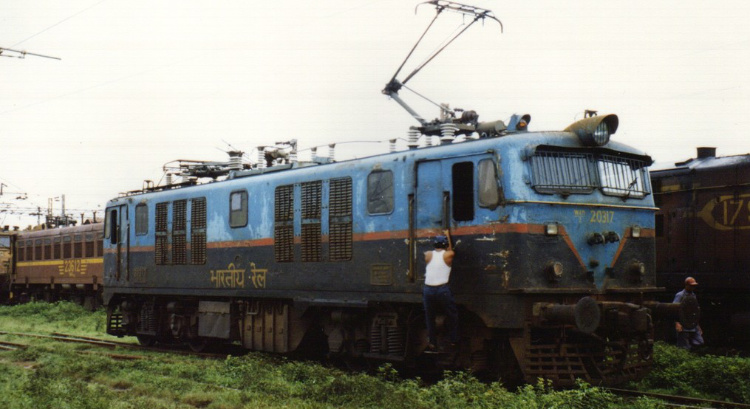
2870hp Mitsubishi locos delivered between 1961 and 1964. First batch of 10 locos had air brakes for the loco and vacuum train brakes, and the second batch of 26 had only vacuum brakes. These were used on ER, and sometimes ran all the way to New Delhi via Kanpur. They were also used double-headed for freight trains. Four traction motors permanently coupled in parallel are fed by ignitron rectifiers. Speed control is by a tap changer on the input transformer. Mitsubishi transformer, 20 taps. Oerlikon exhauster and compressor, Arno rotary converter. None of this class has been preserved.
| WAM-2 Specs |
|---|
| Builders | Mitsubishi |
| Traction Motors | Mitsubishi MB 3045-A (745hp, 725V, 815A, 1000 rpm, weight 2200kg) |
| Gear Ratio | 17:66 |
| Transformer | Mitsubishi, 3000kVA |
| Rectifiers | 8 Mitsubishi water-cooled ignitrons (GU 31), rated at 725V/390A |
| Pantographs | Two Faiveley AM-12 |
| Horsepower | 2870hp |
| Axle Load | 19.1t |
| Bogies | Bo-Bo |
| Weight | 76.03t |
| Starting TE | 25.2 tons at 33.2% adhesion |
| Continuous TE | 14.5 tons |
| Max. Speed | 112km/h |
| Length Over Buffers | 15000mm |
Only two of these locos existed (both at Asansol, #20333, #20337). These were basically the same as WAM-2 locos, but with reversed pantographs and Mitsubishi traction motors from a different batch, and silicon rectifiers (type SF-0C20R (725V/2260kW), rectifier cell SR200F) instead of ignitrons. They came along with the second batch of 26 WAM-2 locos. These locos were ordered with silicon rectifiers to improve reliability and hence putting them to use in ER's suburban sections for push-pull operations.
For other specifications, refer to WAM-2 class above.
First introduced in 1970-71, and made by CLW, this class was IR's workhorse AC electric locomotive for well over 20 years. They were born of the desire to address problems with the WAM-1 (reliability, inadequate adhesion etc.). They use the same Co-Co asymmetric ALCo trimount bogies as the successful WDM-2 diesel class. These locos feature rheostatic braking, and MU capability. They have silicon rectifiers. MU operation up to 4 units possible. Air brakes for loco and vacuum train brakes fitted as original equipment (though many converted to dual and fully air-braked to match rolling stock.) Auxiliaries from Westinghouse and Kirloskar (compressors), S F India (blowers), Northey (exhauster), etc.
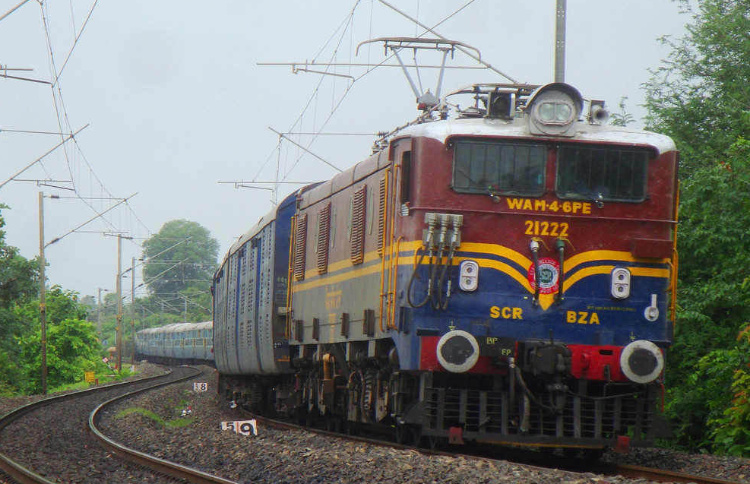
This class proved so successful by virtue of its ruggedness suitable for Indian conditions and simplicity of maintenance, that IR used this basic design for a number of other locos later (WCAM-1, WAG-5A, WCG-2, and some WAP models). Given how long they were in production, a large number of variants existed, both serially produced and modified by various sheds and workshops. WAM-4B's were regeared versions for freight use and many were later modified and converted to other classes (See below). WAM-4P locos were intended for passenger operations, with some regearing and usually allowing all-parallel operation of some or all of the traction motors. WAM-4P D (dual brakes), WAM-4P DB 6P, WAM-4 6P DB HS, and WAM-4 6P D (these were for superfast trains), WAM-4P DB 3P and WAM-4 2S-3P (some superfasts, passengers), and WAM-4P DB 4P (generally for stopping passengers). The 'DB' or 'D' generally, but perhaps not always, indicates dual-brake capability. 'HS' for 'high speed'.
'2S', '3P', '6P', etc. indicate traction motors connected in series or parallel. The WAM-4 has six traction motors, and originally they were wired to be available in different configurations at different power settings. At notches up to 14, all motors were in series (at notch 14 all resistors dropping out); up to notch 21 in series-parallel combinations (three pairs of motors in series, the pairs themselves being in parallel); and further notches with all motors in parallel (at notch 30 all motors are in parallel with resistors dropping out). The WAM-4 locos were later reconfigured to have all motors always in parallel (6P variants) or with the three series-connected pairs in parallel (2S 3P variants). Some WAM-4 locos from CLW were thought to have had the 2S 3P configuration right from the start. The 2S 3P configuration was better for the mixed traffic loads especially as it allowed the locos to start hauling larger loads without stalling. With increasing use of the WAM-4 locos for passenger traffic the all-parallel configuration was deemed more desirable since it allowed higher speeds and higher acceleration. Some other odd combinations of these suffixes have been sighted, such as WAM 4+6P+DB+HS and WAM-4 6P-E.
Many WAM-4 had their MU capability disabled for a long time, before the Tughlakabad shed began restoring them for its fleet to handle high speed container freight operations. WAG-5/WAG-5B locos with road numbers 21101 to 21138 all used to be WAM-4B locos. They were regeared and modified to be suitable for hauling heavier freight loads.
With the introduction of dedicated passenger and freight locos from the mid-90s, these locos began seeing decreasing use, often relegated to either shunting or short distance passenger running. Many sheds began scrapping their holdings from 2013 onwards. As of August 2022, there are only 8 of this class left, all in inferior service at sheds and workshops. These are expected to be scrapped soon. A few of them have been preserved or plinthed at various locations on IR (Bhusawal, Jhansi, Hubballi, CLW etc.)
| WAM-4 Specs |
|---|
| Builders | CLW |
| Traction Motors | Alstom TAO 659 A1 (798hp, 750V, 840A, 1095rpm, 2800kg) |
| Gear Ratio | 15:62 originally; 21:58 for WAM-4P later |
| Transformer | HEIL (later BHEL) BOT 3460 A, 22.5kV/3460kVA |
| Rectifiers | Two silicon rectifier cells, 1270V/1000A each cubicle |
| Pantographs | Two Faiveley AM-12 |
| Horsepower | 3690hp continuous |
| Axle Load | 18.8t |
| Bogies | Co-Co trimount (ALCo) |
| Weight | 112.8t |
| Starting TE | 30 tons |
| Max. Speed | 120km/h |
| Length Over Buffers | 19975mm |
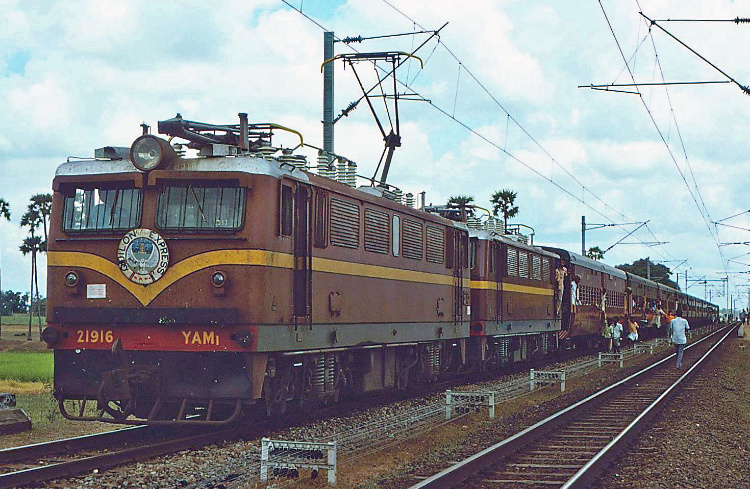
These were IR's only mainline metre gauge AC electric locomotives. 20 in number (18 ordered first, two later) were supplied by Mitsubishi in 1964 and worked the line between Madras and Villupuram on SR. 1600hp locos with B-B monomotor bogies (DC motors permanently coupled in parallel). Air brakes for loco, vacuum train brakes. Oerlikon compressor and exhauster, Arno rotary convertors.
They were in service until 2004 when their operating lines were converted to broad gauge. On June 30, 2004, the last YAM-1 run took place, minutes after the last MG EMU service on the Chennai network reached the Tambaram station. Two of this class are preserved – one at CLW (#21912) and one at the Regional Museum at ICF, Chennai (#21909).
| YAM-1 Specs |
|---|
| Builders | Mitsubishi |
| Traction Motors | ACEC/Alstom/Siemens MG1420. Fully suspended, force-ventilated. 5600kg. 1080kW, 1250V, 920A, 630 rpm |
| Gear Ratio | 3.95:1 |
| Transformer | Mitsubishi 'Shell Sub', 1690kVA, 25 taps |
| Rectifiers | Secheron excitron rectifiers, type A268 (four), 510A/1250V |
| Pantographs | Two Faiveley AM-12 |
| Horsepower | 1600hp |
| Axle Load | 13t |
| Bogies | B-B (monomotors) |
| Weight | 52t |
| Starting TE | 19.5 tons |
| Continuous TE | 13.6 tons |
| Max. Speed | 80km/h |
| Length Over Buffers | 13150mm |
Dedicated Passenger Locomotives
Built by CLW to RDSO specifications beginning in 1980, these were the first in the dedicated electric passenger loco series. These locos were used solely for the Howrah-Delhi Rajdhani at first. A single WAP-1 (#22001) was all that was needed to haul the 18-coach Rajdhani at a max. speed of 120 km/h. Power 3760hp; starting TE 22.4t, continuous TE 13.8t. Loco weight is 112.8t. Motors are grouped in 2S-3P combination and weak field operation is available. Elgi compressors, Northey exhausters, S F India blowers. The locos were originally not designed for MU operation but were later modified to allow MU'ing. Loco air brakes and vacuum train brakes but retrofitted for dual train brakes later.
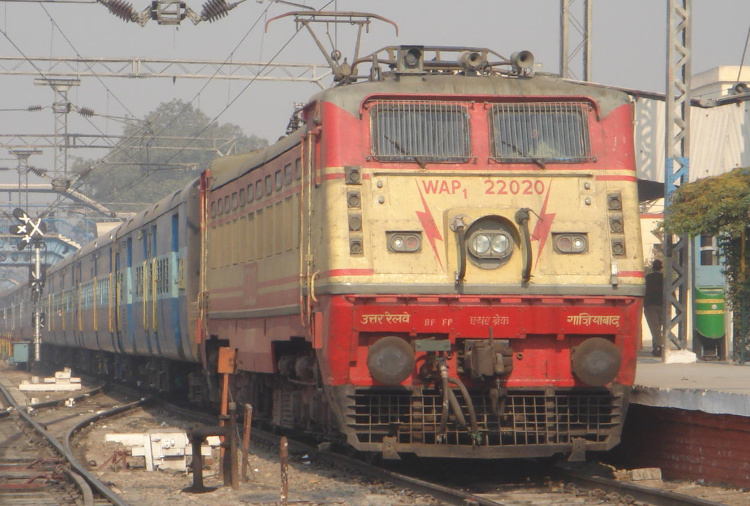
The original WAP-1 locos were modified and re-geared versions of the WAM-4, classified as WAM-4R. Rated max. speed is 130km/h (some documents suggest 140km/h). Some (5?) with Flexicoil Mark II bogies were classified WAP-1 FM II and later WAP-3. Two WAP-1 units were also converted to WAP-6. One of them, #22212, the first prototype WAP-6, was then converted to a WAP-4. Many WAP-1 were converted to WAP-4's by a complete retrofit including new traction motors, new transformers, etc. These upgrades did not result in the 'R' suffix in the road number that is typical for rebuilt locos. Of the class that remain as WAP-1, almost all have had large modifications made to their shell - redesigned frame around the wheels, top mounted headlights, wider and taller windscreens etc.
As of August 2022, 59 of this class are still in service, mostly at Erode and Izzatnagar sheds, with many on the verge of retirement given their age. One, #22004 is preserved at the Arakkonam shed.
Variants:
WAP-3: Originally classified as WAP-1 FMII, these are essentially same as WAP-1 but with different Flexicoil bogies (Flexicoil Mark II for the earlier ones, and Flexicoil Mark 4 (fabricated bogies) for some of the later ones, etc.). The first WAP-3 "Jawahar", #22005, Jan. 4, 1987) was used for the Taj Exp. These locos could only haul 19-coach rakes for the Rajdhani and other prestigious Express trains for which they had been designed, and further required assisting locos on moderately graded sections, and so did not meet their design goals. Max. speed 140km/h. All units were converted back to the WAP-1 beginning 1997.
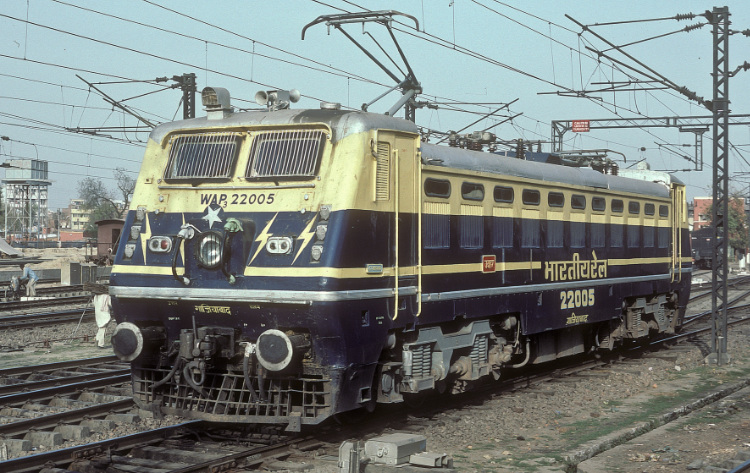
| WAP-1 Specs |
|---|
| Builders | CLW |
| Traction Motors | Alstom/CLW - TAO 659 (770hp, 750V, 1095 rpm) Axle-hung, nose-suspended, force-ventilated |
| Gear Ratio | 58:21 |
| Transformer | BHEL type HETT-3900, 3900 kVA, 32 taps |
| Rectifiers | Two silicon rectifiers, with S18FN35 cells (by Hind Rectifier) with 64 cells per unit. 2700A/1050V |
| Pantographs | Two Faiveley AM-12 |
| Horsepower | 3900hp (3790hp continuous) |
| Axle Load | 18.05t |
| Bogies | Co-Co Flexicoil (cast steel bogies); primary and secondary wheel springs with bolsters |
| Weight | 108.3t |
| Starting TE | 22.4 tons |
| Continuous TE | 13.8 tons |
| Max. Speed | 130km/h |
| Length Over Buffers | 18794mm |
These were a very odd experimental class. A few WAM-2 were re-geared and fitted with modified flexicoil fabricated bogies to increase their speeds and stability. These locos were found only on ER. On rare occasions these locos were used to haul the Howrah Raj in the early 1980s. There are thought to have been only 4 of these, and they were decommissioned in the late 1980s.
Built between 1994 and 2015, these are the more powerful cousins of the WAP-1, with Hitachi H5 15250 motors. 5000hp (later 5350hp). Rated at 140km/h. The need to run longer passenger trains (24 to 26 coaches as against the 19-coach capacity of the WAP-1/WAP-3 locos), and also to eliminate the need for bankers in graded sections led RDSO to consider an upgraded design of the WAP-1 loco and the WAP-4 loco design was published in November 1993. Indigenously designed higher power rated silicon rectifiers and 5400kVA transformer. Locomotive reliability is also increased by the use of Hitachi traction motors. Air brakes for loco and train. Different underframe design to handle larger buffing loads. Cast bogie, Flexicoil Mark 1 design. Weight kept to 112t by the use of aluminium plates, thinner underframe, and reducing some components such as extra sanders. Motors grouped in 6P combination; weak field operation possible.
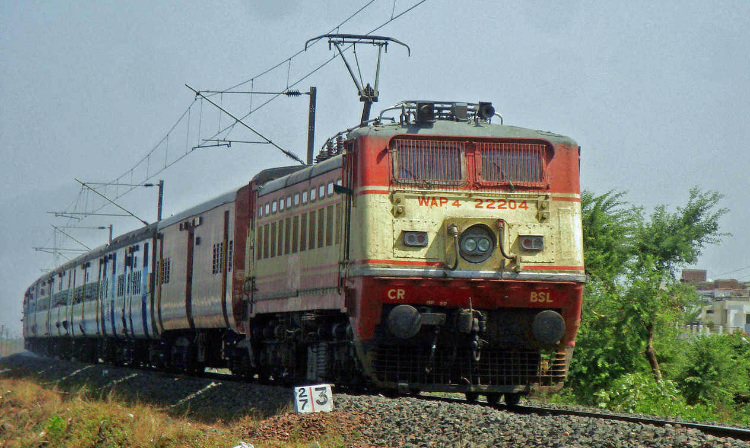
These locos underwent many minor modifications throughout their production run. In 2000, twin-beam headlights were added. In the mid-2000s, they started being fitted with train-parting/pressure loss alarms, and data recorders for speed, energy consumption, etc. These locos also feature roof mounted twin beam headlights, square WAP-5 type windscreens and a digital notch repeater along with a better layout and good seats for the drivers. A few were provided with signalling lamps on the sides but this does not have seem to have been uniform.
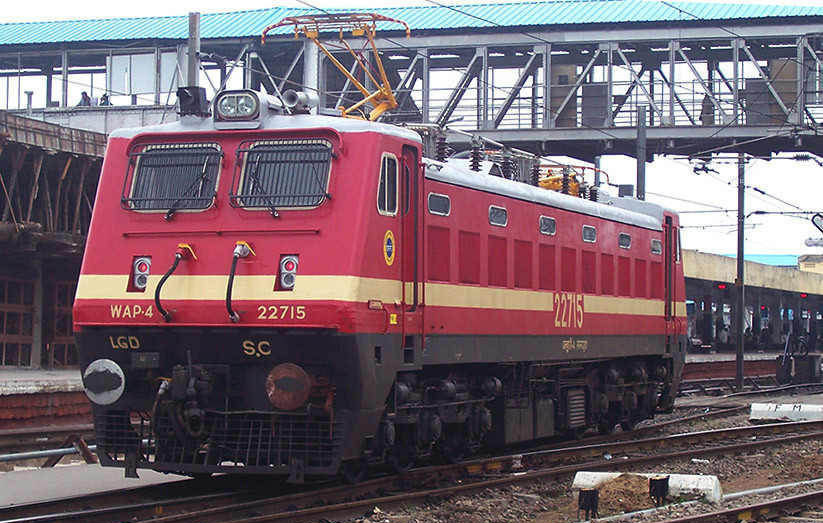
There are over 700 of this class still in operation as of February 2022, hauling mostly trains running with ICF stock. A few experiments to fit them with hotel load capabilities did not succeed so they are not often assigned to LHB stock (with run with HOG capable WAP-7). The first batch of WAP-4 were multi-unit capable, but most of the newer ones aren't. However, starting in 2020, there have been directives to revive or retrofit MU capabilities in these locos. With their dwindling passenger train use, it was felt that they might be used MU'ed for fast freight operations.
Note on the traction motors: The Alstom-designed 770hp TAO motors used in the WAP-1 and WAP-3 were seen as the weak link in the reliability of the locos for passenger train use. At the time, Hitachi motors of 840hp were in use on freight locos and had very high reliability, but adapting them for use with a passenger loco proved a formidable challenge because of the weight constraints. The WAP-4 design efforts involved many modifications for weight reduction, including a lighter underframe, aluminium foil-wound transformer, and the use of aluminium chequered plates, and these have allowed the use of the heavier, but more powerful and more reliable Hitachi motors on the WAP-4 locos.
Variants:
WAP-6: All are now converted back to WAP-4. One or two prototypes were built early from existing WAP-1 or WAP-4 locos without renumbering. WAP-4 #22212 (formerly a WAP-1) was the first to be converted to a WAP-6; Later 16 were built, all in the number series 22400-22416. All featured high-adhesion fabricated bogies (Flexicoil Mark IV) which are somewhat similar to the ALCo Hi-Adhesion bogies, a lighter underframe, reduced no. of sanders etc. They were intended for service at 160km/h but failed trials and were restricted to a top speed of 105km/h. They were all based at Asansol shed (on ER).
| WAP-4 Specs |
|---|
| Builders | CLW |
| Traction Motors | Hitachi HS15250 (630kW, 750V, 900A. 895rpm. Weight 3500kg). Axle-hung, nose-suspended, force ventilated, taper roller bearings. |
| Gear Ratio | 23:58 |
| Transformer | HETT-5000kVA initially, later HETT-5400kVA; 32-taps |
| Rectifiers | Two silicon rectifiers; S18FN350 cells (Hind Rectifier or Stesalit) with 64 cells per unit. 2700A/1050V. |
| Pantographs | Two Stone India AM-12 (many types later - Schunk, Faiveley, Contransys) |
| Horsepower | 5000hp (later 5350hp) |
| Axle Load | 18.8t |
| Bogies | Co-Co Flexicoil Mark-1 cast |
| Weight | 112.8t |
| Starting TE | 30.8 tons |
| Continuous TE | 19.6 tons |
| Max. Speed | 140km/h (Tested at 169.5km/h) |
| Length Over Buffers | 18794mm |
Bo-Bo, 3-phase all AC locomotives, based on Swiss Lok 2000 design. First batch of 10 were imported from ABB/AdTranz in 1995 (actually 11, but one #30008 was damaged by fire in transit and deemed unusable on arrival.) CLW has since been manufacturing them. Initial units all had GTO thyristors for traction control, but units post #30082 are IGBT based. Rated top speed is 160km/h, although in trials a WAP-5 loco is said to have been run at 184km/h. Initial rating was 5450hp, but improvements to the control software have resulted in power delivery of 6000hp to the wheels. Auxiliaries from ABB, Howden Safanco, BEHR, etc. 78t weight. Fully suspended motors.
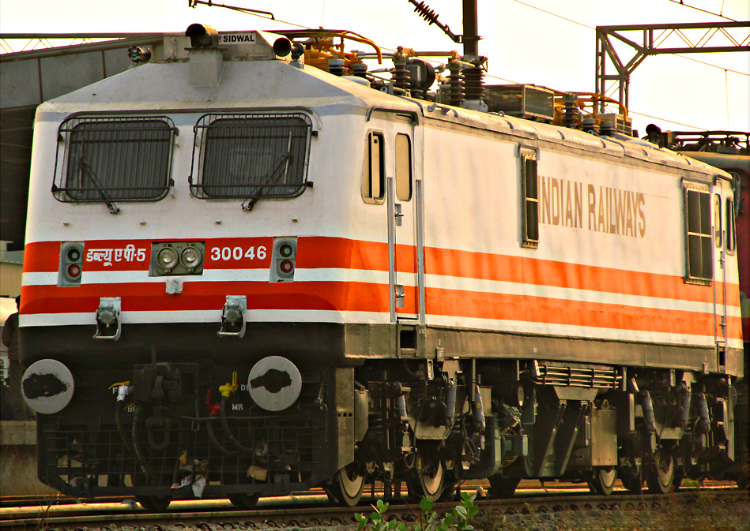
Other notable features of this loco are the provision of taps from the main loco transformers for hotel load, pantry loads, flexible gear coupling, wheel-mounted disc brakes, and a potential for speed enhancement to 200km/h. Braking systems include regenerative braking (160kN), loco disc brakes, automatic train air brakes, and a charged spring parking brake. MU operation possible with a maximum of two locos. Initially, these locos were intended for use with high-speed medium load trains such as the Rajdhani and Shatabdi trains, but have since been used on heavier loads. They were originally only homed at Ghaziabad shed (NR), but Vadodara (WR) started receiving a large number of them when the Mumbai network became all AC. They are now also now based at Howrah.
After the first four were built by CLW, there was a pause in the manufacture of this class at CLW. A problem with the Hurth coupling and its indigenous replacement were the cause of the delay (IR not wanting to import this expensive component and drive up manufacturing costs.) In late 2014, locally manufactured components passed trials and production was resumed.
#30086 has a different gear ratio (59:35:19) and control software intended for operations at 200km/h. No actual trials have taken place at that speed, as no current permanent way supports such a speed. #30164 features a more aerodynamic profile, ostensibly to run at higher speeds. In October 2020, #35012 & #35013 were manufactured with one cab having an aerodynamic profile, while the other having a flat front. These were intended for use on Tejas Expresses in a push-pull configuration, but no actual run in this style has taken places. Both these locos are now being used to haul regular express and passenger trains.
| WAP-5 Specs |
|---|
| Builders | ABB/CLW |
| Traction Motors | ABB 6FXA 7059 3-phase squirrel cage induction motors (1150kW, 2180V, 370/450A, 1583/3147 rpm). Forced-air ventilation, fully suspended. |
| Gear Ratio | 67:35:17 (3-stage gears) |
| Transformer | Type LOT-7500 by ABB, Hi-Volt, BHEL |
| Power Convertor (original GTO) | Power convertor from ABB, type UW-2423-2810 with SG 3000G X H24 GTO thyristors (D 921S45 T diodes), 14 thyristors per unit (two units). Line convertor rated at 2 x 1269V @ 50Hz, with DC link voltage of 2180V. Drive convertor rated at 2180V phase to phase, 953A output current per phase, motor frequency from 0 to 160Hz. |
| Pantographs | Two Faiveley AM-92 (many types later - Schunk, Stone India, Contransys, Brecknell Willis) |
| Horsepower | 6000hp (5450hp originally) |
| Axle Load | 19.5t |
| Bogies | Bo-Bo Henschel Flexifloat |
| Weight | 78t |
| Starting TE | 26.3 tons |
| Continuous TE | 22.4 tons |
| Max. Speed | 160km/h |
| Length Over Buffers | 18162mm |
IR's modern workhorse loco. First introduced in 2000, there are now over 1400 in service making them the most numerous passenger locomotive. Based on the WAG-9 (see below), with modified gear ratio, control software and reduction in weight. Initial models were rated at 6125hp total power and 33000 kgf (323kN) tractive effort. Modifications during continuing trials resulted in improved performance with the loco now yielding 6350hp total power and 36000 kgf (352.8kN) tractive effort. Braking systems as in the WAP-5, with regenerative braking rated at 183kN in the first units and 260kN in the later ones. Max. tested speed is 160km/h, rated for 140km/h.
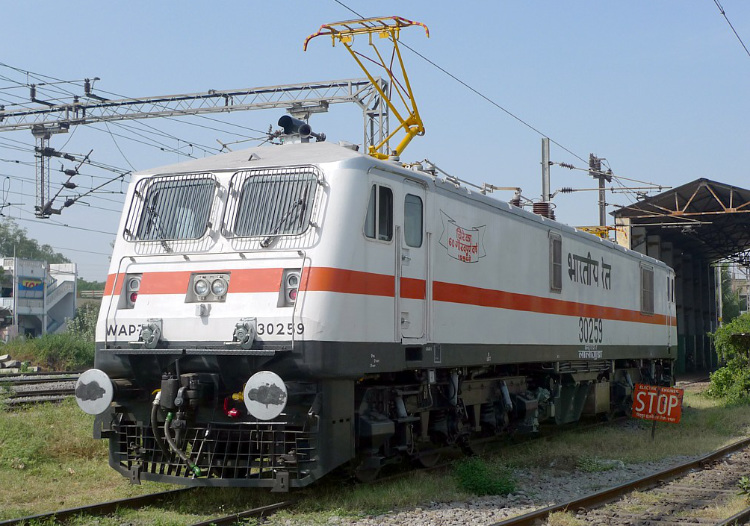
Like the WAP-5, all initial ones featured GTO based traction control systems, but IGBT based ones started appearing in the early 2010s. These were given the subclass WAP-7i initially, but with all locos being manufactured with IGBT controllers subsequently, this has been done away with, and all locos are classed WAP-7. Early units also did not have hotel load capability, but starting 2015, this became part of the standard equipment. Older locos are being retrofitted with the capability during overhauls. Some locos are also push-pull capable (Kalyan shed has a pair of these (#30579, #30580) that haul CR's Rajdhani Express to H.Nizamuddin.) Recent units also feature one high-rise pantograph as original equipment in case they are needed to service lines that act as feeders to the Western DFC.
Variants:
WAP-7HS: HS for 'High Speed'. This is a one-off variant (#30750) designed in 2019 to increase the base model's max. speed to 180km/h and make it possible to haul 24-coach loads at 160km/h. Loco weight has been reduced by 14.5t (how??); Max. axle load reduces to 18.08t; Changed gear ratio (70:22); Tweaks to the control software. Trials were conducted at 180km/h on the Kota-Sawai Madhopur section on WCR. It is not clear if these trials were successful and if more of this variant is being considered for serial production. #30750 continues to haul trains at a max of 130km/h.
| WAP-7 Specs |
|---|
| Builders | CLW |
| Traction Motors | 6FRA 6068 3-phase squirrel-cage induction motors (850kW, 2180V, 1283/2484 rpm, 270/310A). Forced ventilation, axle-hung, nose-suspended. |
| Gear Ratio | 72:20 |
| Transformer | Type LOT-7500/7775 by ABB, Hi-Volt, BHEL |
| Power Controller | GTO: UW-2423-2810 with SG 3000G X H24 GTO thyristors from ABB; IGBT: 5SNA 1200G450300 from BHEL, MEDHA |
| Pantographs | Two Secheron 103-2500 (many types later - Schunk, Stone India, Contransys, Faiveley) |
| Horsepower | 6350hp |
| Axle Load | 20.5t |
| Bogies | Co-Co, ABB bogies |
| Weight | 123t |
| Starting TE | 36 tons |
| Max. Speed | 140km/h |
| Length Over Buffers | 20562mm |
Dedicated Freight Locomotives
Among the first AC electrics to run in India. These were a dedicated freight followup to the mixed use WAM-1. The first 30 were made by the 50 Cycles European group, with the rest made by CLW using supplied kits. 2850hp, monomotor bogies with B-B wheel arrangement, Jacquemin drives (?) and excitron rectifiers. Motors are permanently coupled in parallel, with speed control by transformer taps. Air brakes for loco, vacuum train brakes as original equipment. Regenerative braking provided. Typically French features include elongated 'D'-shaped buffers. The Indian modifications included addition of a cowcatcher, CBC couplers, and a large roof-mounted searchlight-style head lamp. Although sterling performers, some of their highly advanced features such as the spring-borne traction motors, etc., did not suit Indian conditions.
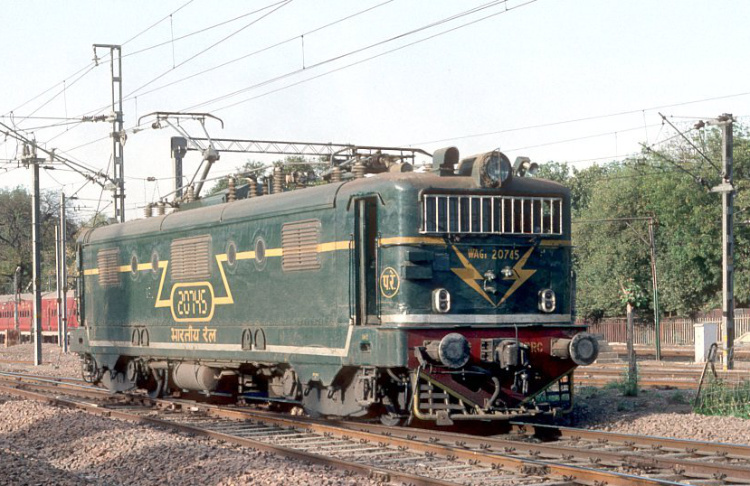
Several were based at Arakkonam, Vijayawada, Baroda, and other places. Most were decommissioned by the 1990s, although a few were seen still in use in 2000 or so. Two units (the last ones, #20790, #20791) built by CLW in 1964 were denoted WAG-1S; it is not clear how they were different from the others.
| WAG-1 Specs |
|---|
| Builders | 50 Cycles Group, CLW |
| Traction Motors | AEC/Alstom/Siemens MG1420. Two motors (monomotor bogies), force-ventilated, fully suspended. |
| Gear Ratio | 3.95:1 |
| Transformer | MFO, type BOT 3150. 22.5kV/3000kVA. 32 taps |
| Rectifiers | Four Secheron A268 excitrons, 510A/1250V |
| Pantographs | Two Faiveley AM-12 |
| Horsepower | 2850hp |
| Axle Load | 21.3t |
| Bogies | B-B (monomotors) |
| Weight | 85.2t |
| Starting TE | 30 tons at 35% adhesion |
| Continuous TE | 23.7 tons |
| Max. Speed | 80km/h |
| Length Over Buffers | 17092mm |
Made by Hitachi, they were the alternative to the European WAG-1. 45 of these were delivered between 1964-1965 (IR numbers 20804-20848). B-B bogies, monomotor design with motors permanently coupled in parallel, silicon rectifiers, rheostatic braking provided, Westinghouse compressor, Northey exhauster. These were based at Asansol on ER when they were inducted, and regularly hauled both freight and ordinary passenger trains. They were moved to Bhusawal and Itarsi sheds on CR in the early 1980s from where they retired in the late 1990s. None of them have been preserved.
| WAG-2 Specs |
|---|
| Builders | Hitachi |
| Traction Motors | Hitachi EFCO HKK (1270kW, 1250V, 1080A, 695rpm, weight 5300kg) |
| Gear Ratio | 3.88:1 |
| Transformer | Hitachi AFI-AMOC, 3700kVA, 32 taps |
| Rectifiers | AEV-48 silicon rectifiers, 2040A / 2550kW |
| Pantographs | Two Faiveley AM-12 |
| Horsepower | 3400hp |
| Axle Load | 21.3t |
| Bogies | B-B (monomotors) |
| Weight | 85.2t |
| Starting TE | 30 tons at 37% adhesion |
| Continuous TE | 22.6 tons |
| Max. Speed | 80km/h |
| Length Over Buffers | 16882mm |
0 of these locos were supplied by the 50 Cycles group in 1965. 3150hp, B-B monomotor bogies, silicon rectifiers, air loco brakes, vacuum train brakes and rheostatic braking. MU operation of upto 4 were possible. These are essentially the precursor to the indigineously assembled WAG-4 (see below).
186 were built between 1967 and 1969 by CLW, with equipment from the 50 Cycles group. The DC traction motors for these were the first to be manufactured indigenously by CLW. Other auxiliary components were also made domestically. Most of these locos were based at Kanpur shed on NR. B-B monomotor bogies, silicon rectifiers, air loco brakes, vacuum train brakes, rheostatic brakes. Upto four locos could be operated as multi-unit. Some locos were converted to dual brake systems. While they were primarily freight locomotives, they were also used to haul short-haul passenger trains.
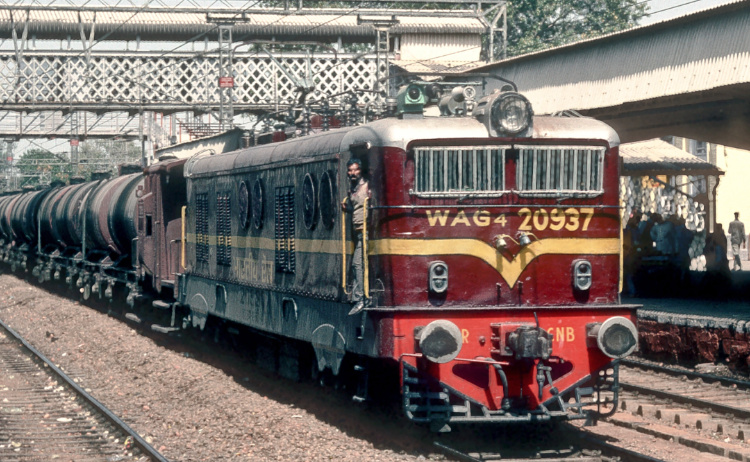
| WAG-4 Specs |
|---|
| Builders | CLW |
| Traction Motors | AGEC MG 1580 A1 (1160kW, 1270V, 1040A, 690 rpm, weight 5850kg). Fully suspended, bogie-mounted. |
| Gear Ratio | 3.95:1 |
| Transformer | Oerlikon BOT 3460, 32 taps |
| Rectifiers | Two GL 82220 silicon rectifiers, 1000A/1270kW/1270V |
| Pantographs | Two Faiveley AM-12 |
| Horsepower | 3150hp |
| Axle Load | 21.9t |
| Bogies | B-B (monomotors) |
| Weight | 87.6t |
| Starting TE | 30 tons at 34% adhesion |
| Continuous TE | 23.2 tons |
| Max. Speed | 80km/h |
| Length Over Buffers | 17216mm |
The initial batch of these were actually re-geared WAM-4 locos classified WAM-4B (#21100-#21138). Serial production with a slightly modified traction motor (3900hp vs 3850hp), heavier frame to improve adhesion etc. began in 1984. Co-Co bogies based on ALCo trimount design. TE 382kN (33500kgf); continuous TE 202kN (20600kgf). Adhesion 29%. A very successful class, and probably the one with the most numbers produced. There are many variants of these, starting with the plain WAG-5. WAG-5A locos have Alsthom motors. Later versions were WAG-5H and variants with Hitachi motors: WAG-5HA by CLW and WAG-5HB built by BHEL to RDSO's specifications.
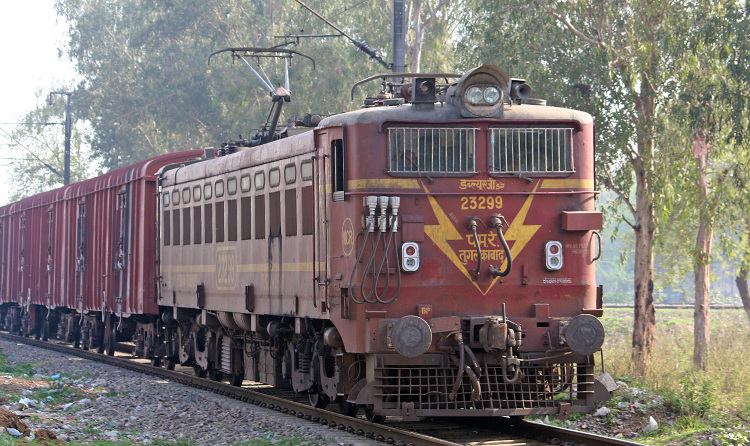
Auxiliaries are from many sources: typically Elgi compressors, Northey exhausters, and other equipment from S F India, but many variations exist. Speed control by parallel combinations of motors and weak field operation. Air brakes for loco, dual train brakes are original equipment. Equipped for rheostatic braking. The original WAG-5 units had a top speed of 80km/h. Many variants have a gear ratio of 21:58, the same as that of the WAM-4 6P, which allows these WAG-5 locos to be used for mixed applications including hauling passenger trains at 100km/h.
Although a great improvement over earlier locomotive classes, the WAG-5 models do have limitations, one of which is the inability to start and haul large loads (4700t -- 58 BOXN wagons) on gradients steeper than 1:200 or so. WAG-5 locos can be used as multiple units in configurations of 2, 3, 4, or more locos. With the large influx of WAG-7 and WAG-9 locos in recent years, use of these locos has steadily declined, with many being scrapped. As mentioned above, some WAG-5 with modified gear ratios haul local passenger trains, but as EMUs take over these kinds of trains, their use in such cases has also declined.
| WAG-5 Specs |
|---|
| Builders | CLW, BHEL |
| Traction Motors | Alstom TAO 659 (575kW, 750V, 1070 rpm) or TAO 656 or Hitachi HS 15250A; Axle-hung, nose-suspended. Six motors. |
| Gear Ratio | 62:16 or 62:15 with Alstom motors, some 64:18 (Hitachi motors), many now 58:21 for mixed use |
| Transformer | BHEL, type HETT-3900. 3900kVA, 22.5kV, 182A. 32 taps |
| Rectifiers | Silicon rectifiers (two) using 64 S-18FN-350 diodes each from Hind Rectifier, 2700A/1050V per cubicle |
| Pantographs | Two Faiveley AM-12 |
| Horsepower | 3900hp |
| Axle Load | 19.8t |
| Bogies | Co-Co cast bogies (ALCo trimount) |
| Weight | 118.8t |
| Starting TE | 33.5 tons at 29% adhesion |
| Continuous TE | 20.6 tons |
| Max. Speed | 100km/h |
| Length Over Buffers | 19974mm |
These are actually three distinct types of locomotives, oddly assigned a single class! WAG-6A models are from ASEA, while WAG-6B and WAG-6C are from Hitachi. They are all 6000hp locos with thyristor-controlled DC traction motors. Until about 1993 they were the most powerful freight locos in IR's fleet. The development of this technology (chopper control) stopped when the (better) AC motor technology was introduced in IR in the form of the WAP-5 and WAG-9 locomotives.
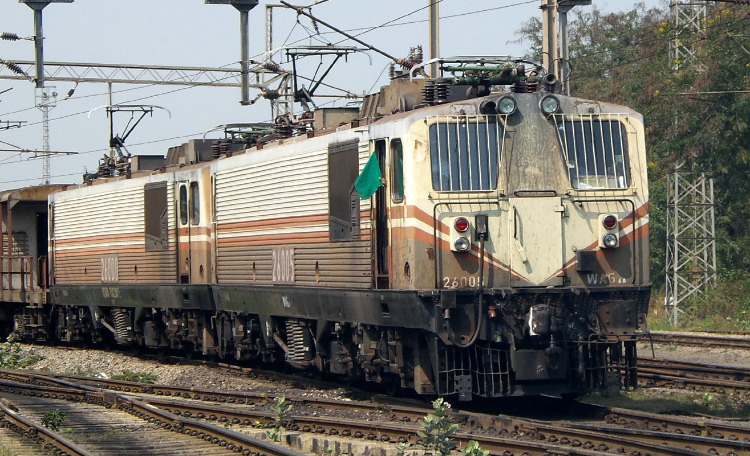
WAG-6A and WAG-6B locos have Bo-Bo-Bo wheel arrangements, whereas the WAG-6C locos have a Co-Co arrangement. Six bogie-mounted separately excited DC traction motors are used, and speed control is via the manipulation of the phase angle by a thyristor converter and a separately powered field coil. Microprocessor control with ground speed detection (slip control) and creep control system to maximize adhesion. Air brakes for loco and train; dynamic brakes provided. The WAG-6 series locos are the only ones with 'vestibules' to connect between MU'd locos. WAG-6A locos have half-height vestibules and WAG-6B and WAG-6C locos have full-height vestibules. The WAG-6A models are said to be upgradable to 160km/h but IR never tried this out. All WAG-6 variants can be used in MU pairs but not with more than 2 locos.
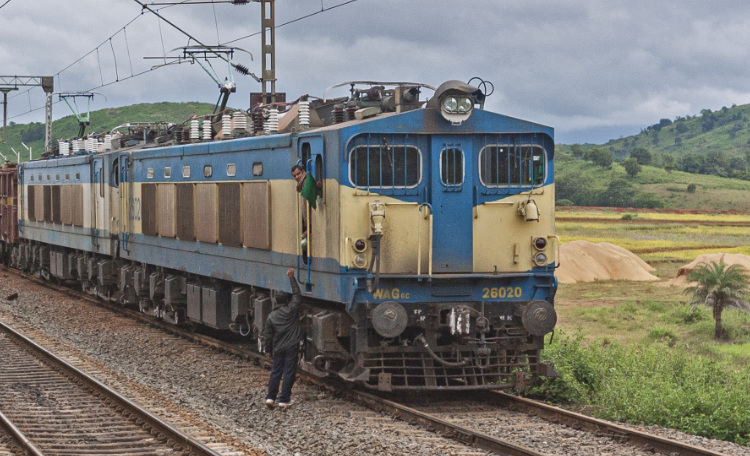
The WAG-6A body shells were built by SGP in Austria; the rest of the locos were built and the entire units assembled in Västerås, Sweden by ASEA. ASEA constructed a special length of 1.67m (BG) track for testing these before delivery. The locos were fitted with BG bogies at Göteborg harbour after being transported there on standard gauge bogies. The first WAG-6A was delivered around December 1987 and the remaining five in January 1988.
All WAG-6 locos are based at Waltair (Vishakapatnam) shed and have been used used for ore freights and material trains on the Kirandul-Kottavalasa line. They were in regular use until 2000 when maintenance problems began affecting their use. In Oct. 2002 the WAG-6A were technically suspended from operations for POH for a while. Most of the WAG-6B and WAG-6C were also similarly suspended at different times. However, they were revived soon and continued service for a few more years until about 2015. With the influx of modern WAG-9 locos, the WAG-6 were soon relegated to odd shunting jobs around marshalling yards near Vishakapatnam. Out of the 18 locomotives of this class, only 5 are in service as of February 2021 (2 WAG-6B, 3 WAG-6C). One each of the various sub-classes are preserved at the Waltair shed (#26000 WAG-6A; #26010 WAG-6B; #26020 WAG-6C).
| WAG-6 Specs |
|---|
| Builders | WAG-6A: ASEA;
WAG-6B/6C: Hitachi |
| Traction Motors |
WAG-6A: ASEA L3 M 450-2; Six motors, fully suspended, force-ventilated, separately excited, 3100kg;
WAG-6B: Hitachi HS 15556-OIR, bogie mounted, force-ventilated, compound-wound, 3200kg;
WAG-6C: Hitachi HS 15256-UIR, axle-hung nose-suspended, force-ventilated, compound-wound, 3650kg
|
| Transformer |
WAG-6A: ASEA TMZ 21, 7533kVA;
WAG-6B/6C: Hitachi AFIC-MS, 6325kVA
|
| Thyristor Controller |
WAG-6A: 24 YST 45-26P24C thyristors each with 24 YSD35-OIP26 diodes, 2x511V, 2x4500A;
WAG-6B/6C: 32 CGOIDA thyristors each with 24 DSP2500A diodes. 2x720A, 850V
|
| Pantographs |
WAG-6A: Two Stemman BS 95;
WAG-6B/6C: Two Faiveley LV2600
|
| Horsepower |
WAG-6A: 6280hp;
WAG-6B/6C: 6050hp
|
| Axle Load |
WAG-6A: 20.5t;
WAG-6B/6C: 20.5t
|
| Bogies |
WAG-6A: Bo-Bo-Bo;
WAG-6B: Bo-Bo-Bo;
WAG-6C: Co-Co
|
| Weight |
WAG-6A: 123t;
WAG-6B/6C: 123t
|
| Starting TE |
WAG-6A: 46 tons;
WAG-6B/6C: 45 tons
|
| Continuous TE |
WAG-6A: 32 tons;
WAG-6B/6C: 32 tons
|
| Max. Speed |
WAG-6A: 120km/h;
WAG-6B/6C: 100km/h
|
| Length Over Buffers |
WAG-6A: 20600mm;
WAG-6B/6C: 19700mm
|
Built by CLW to RDSO specifications, these represent the next indigenous design step up from the WAG-5 locomotives. Used primarily for goods haulage, these locos have a Co-Co wheel arrangement with high-adhesion bogies (shared with WCAG-1, WCAM-3, WDG-2/3A) and Hitachi motors providing 5000hp. Starting TE 402kN (41000kgf); continuous TE 235kN (24000kgf). Adhesion 34.5%. The higher tractive effort compared to the WAG-5 locos allows them to attain higher balancing speeds under load. The first 71 of these all went to the Mughalsarai shed. Kanpur was the second shed to get these locos.
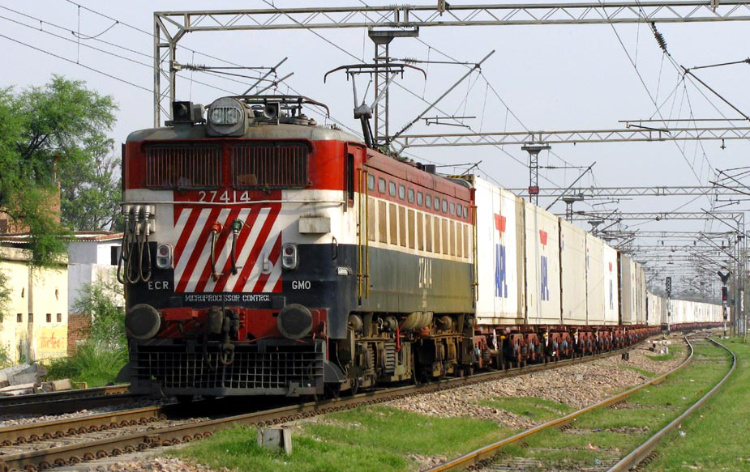
Traction motors are permanently coupled in parallel. Max. speed is 100km/h. Air brakes and dynamic (rheostatic) brakes for loco, dual train brakes. MU operation with up to 4 units is possible. Traction equipment such as the smoothing reactor, etc., are all higher rated than in the WAG-5 due to the higher currents this loco draws. Auxiliaries include Rigi compressor, Arno rotary converters, Siemens smoothing reactor, Northey exhauster; other auxiliaries such as blowers from S F India. A number of these locos have been retrofitted with static converters to power the auxiliaries, replacing the older Arno rotary converters. These static converters are more efficient and require less maintenance, besides having self-diagnostic systems to make troubleshooting easier.
Two locomotives in this class were designated WAG-7H. experimentally modified to provide higher TE by increasing their weight. Oscillation trials were conducted on a ballasted WAG-7 (#27002) around 1995, and then a new WAG-7 loco was built by CLW to have higher weight using thicker plates in the underframe of the loco (#27061, 1995). Weight is 132t, max. TE 441kN (45000 kgf). Traction motors are Hitachi HS15250-G, perhaps a minor variant of HS15250.
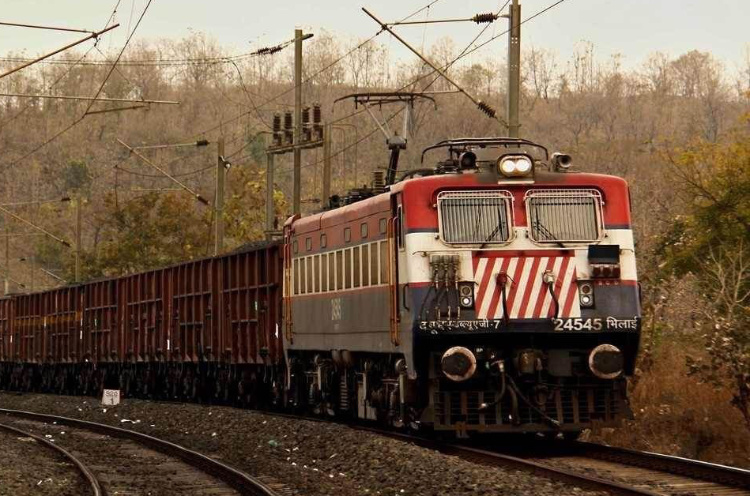
In 2008, these locos underwent minor internal changes and extensive cosmetic ones. The flat fronted cab gave way to the sloped profile from the WAP-4 which made the cab larger and shifted certain components inside the machine room. Also in 2008, BHEL started manufacturing these according to specs from RDSO. These locos (in the 245xxx number range) carried over the new shell design, but had significant changes inside the cab – joystick for the master controller instead of the wheel, air-conditioning as standard, improved 3-way adjustable seats etc. Serial production of this class stopped in 2015 (in favour of the 3-phase WAG-9).
| WAG-7 Specs |
|---|
| Builders | CLW |
| Traction Motors | Hitachi HS15250-G (630kW, 750V, 900A. 895rpm. Weight 3650kg). Axle-hung, nose-suspended, force ventilated, taper roller bearings. |
| Gear Ratio | 65:18 |
| Transformer | CCL India, type CGTT-5400, 5400kVA, 32 taps |
| Rectifiers | Two silicon rectifiers, cell type S18FN350 (from Hind Rectifier), 64 per bridge, 2700A / 1050V per cubicle |
| Pantographs | Two Stone India AN-12 |
| Horsepower | 5000hp |
| Axle Load | 20.5t |
| Bogies | Fabricated Co-Co high-adhesion based on ALCo design |
| Weight | 123t |
| Starting TE | 41 tons at 34.5% adhesion |
| Continuous TE | 24t |
| Max. Speed | 100km/h |
| Length Over Buffers | 20934mm |
These were an experimental class built by BHEL in 1996. Only two were made, with no IR running numbers. Similar appearance to the WCAM-2/3 locos. 5000hp with thyristor chopper control of DC motors with Flexicoil Mark IV high-adhesion bogies. These locos were designed to be the next evolution of the WAG-7, with some of the more sophisticated technology borrowed from the WAG-6. Both units now lie mothballed at a siding at BHEL's plant in Bhopal.
IR's workhorse electric freight locomotive, with over 3000 in service as of August 2022. These were first imported from ABB in 1996, but CLW started serial production with indigenous components in November 1998. Co-Co, 6125hp, 3-phase all AC traction motors. Until 2010, traction control was via GTO thyristors, but since then all have IGBT based control. Initial auxiliaries from ABB, Landert, Behr, Howden Safanco, etc. but now indigenous. Air brakes for both locomotives and train. Regenerative brakes provide about 260kN of braking effort. 2 units can be coupled in multi-unit configurations.
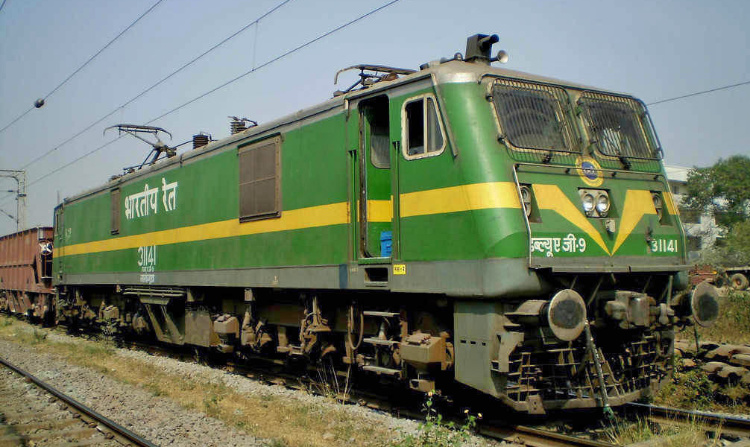
The WAG9's have undergone significant internal design changes since their induction to better suit Indian conditions and loads. The first such change was improving their adhesion characteristics by providing extra ballast (welded in four locations in the machine room). Weight increased from 123t to 132t. These locos are classified as WAG-9H. First one (#31130) was at Gomoh, but was deballasted later because of certain concerns about weight. These concerns were addressed soon with all subsequent locos being made to this heavier specification. The second revision was the provision of IGBT based traction control instead of GTO thyristors starting 2010. These locos were initially classified as WAG-9I, but this designation was short-lived, with locos being simply marked WAG-9H in subsequent production runs.
The third significant change happened in 2016-17, when the brake rigging in these locos was changed. Up until this point, WAG-9/WAG-9Hs had TBUs (Tread Breaking Units) which provided finer control over braking individual axles, especially during wheel slips. But these systems were proving to be unreliable and more expensive to maintain. RDSO decided to replace these TBUs in WAG-9s with more conventional braking systems found in other locomotives. These WAG-9s were designated WAG-9HC. All WAG-9s produced since then are of this type, with many of the older fleet being retrofitted during overhauls.
| WAG-9 Specs |
|---|
| Builders | ABB, CLW, DLW, DMW |
| Traction Motors | 6FRA 6068 (850kW, 2180V, 1283/2484 rpm, 270/310A. Weight 2100kg) Axle-hung, nose-suspended |
| Gear Ratio | 77:15, 64:18 |
| Transformer | ABB LOT 6500, 4x1450kVA |
| Traction Control | ABB made UW-2423-2810 with SG 3000G X H24 GTO thyristors, BHEL/Medha SSNA 1200G450300 IGBT with D921S45T diodes |
| Pantographs | Initially Secheron ES10 1Q3-2500, but many later including high-reach ones from Faiveley, Contransys etc. |
| Horsepower | 6125hp |
| Axle Load | WAG-9: 20.5t, WAG-9H/HC: 22.5t |
| Bogies | Co-Co, ABB bogies |
| Weight | WAG-9: 123t, WAG-9H/HC: 132t |
| Starting TE | WAG-9: 46 tons, WAG-9H: 53 tons |
| Max. Speed | 100km/h |
| Length Over Buffers | 20562mm |
These are 9000hp variants of the WAG-9H. As of February 2021, three of them have been produced and are undergoing trials over SECR and SCR. They feature upgraded equipment (traction motors, transformers etc.) from Siemens, BHEL and Medha within the same space envelope and shell design of the WAG-9. Further specifics are unknown at the moment, as is IR's production plan for them.
Initially classified as WAGC-3, these are an experimental class that take WDG-3A diesel locos due for mid-life overhaul and convert them to electric locomotives by utilizing traction motors, bogies and other common components. IR's goal with this type of locomotive was to increase its fleet of electrics at a rapid pace given the vast number of diesel still available. But with less than satisfactory running trials and financial trade-offs, this class is not likely to see further development or production.
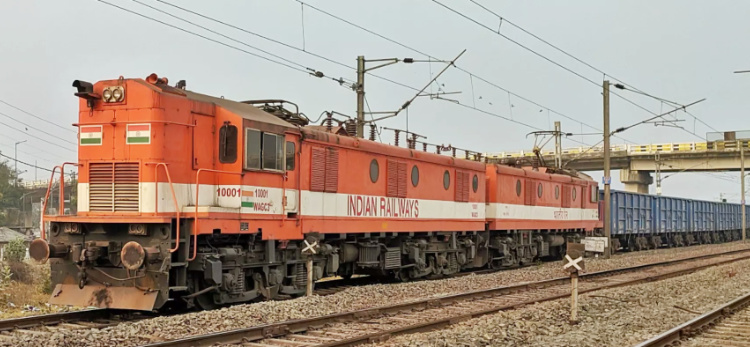
10000hp twin section locos, utilizing two WDG3-A's as the base. Transformers and other electrical equipment replace the ALCo prime mover in the body. Each section gets one pantograph for power collection. Two of these were produced in 2018-19, both homed at Bondamunda shed on SER. #10001 features cab designs from the WDG-3A (with modified controls for an electric loco) with side walls and panels from a WAG-5/WAM-4 locomotive. The second one #10002 has similar side walls and panels, but cabs from the WAG-9.
Another experimental diesel to electric conversion class, this time based on the WDG-4. 12000hp, twin section locos, Co-Co+Co-Co. Traction motors, bogies and other common electrical components from the diesel mated to a WAG-9 shell and cab. GTO based traction control convertors replaced with IGBT based ones. Transformers and other diagnostics/control features come from the WAG-9, with ABB enhancing its software to suit the EMD traction motors better. 2x540 KN maximum tractive effort, with 2x270 KN of regenerative braking effort.
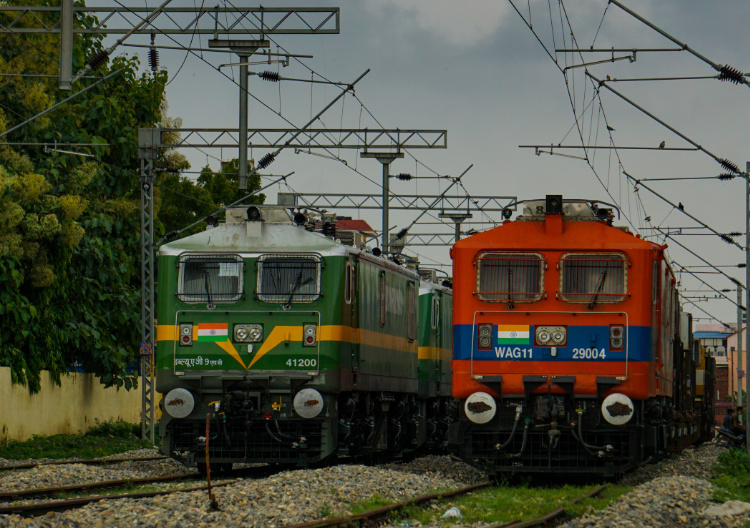
Three of this class have been manufactured by BLW/DLW since 2018. All three have significant differences to each other, despite sharing the same class code. #29001 has the transformer mounted on the body, with changed equipment layouts, a different roof design, an elongated side wall and a modified WDG-4 underframe. #29002 carries much the same design as the previous one, except the transformer is underslung, making the roof design simpler. Equipment layout also is the same as WAG-9. #29003 has cabs on both ends of each section, making each section independently operable in any direction. #29003 also features a modified underframe from a WAP-7 rather than WDG-4. Control, equipment and shell exactly as the WAG-9. This loco also has four pantographs rather than two of the previous units.
Like the WAG-10, this class is not expected to enter serial production. All three units were initialy allocated to the Tughlakabad shed of WCR, but transferred later to Bondamunda on SER where they are seen hauling loads in mineral heavy lines.
Based on Alstom's Prima 2 T8 platform, these are IR's most powerful locomotives in service currently. Twin section, Bo-Bo+Bo-Bo, 12000hp with a maximum tractive effort of 705kN. Axle weight of 22.5t, though a 25t variant is being planned. They can start a 6000 ton train on a 1:150 gradient. Traction motors and transformers from ABB. Each section has one cab with a vestibule connecting both. Two high-reach pantographs, one per section. In a first for freight locomotives on IR, fully blended brakes (regenerative and pneumatic air) are standard equipment. Also as part of standard equipment are a display unit with touch controls to replicate hardware switches. These locos also have crew friendly features like toilets and air-conditioning. They are primarily intended for use on the Eastern DFC, but until that is fully ready, they are being utilised over IR's regular network hauling heavy freight.
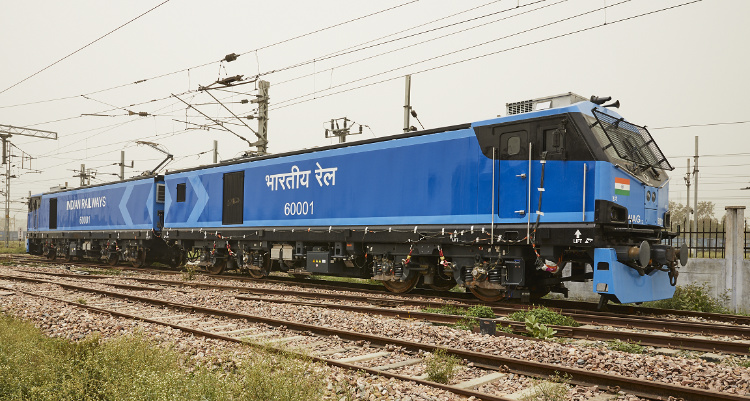
After a global search for suppliers, Alstom won the contract in 2015 with the promise to build 800 locos of this class at a dedicated plant in Madhepura, Bihar. The initial version of this locomotive, classified as WAG-12, had a lot of issues related to ride quality during proving trials. RDSO and Alstom went back to the drawing board and revised a host of things – bogie solebar changed from flat to gooseneck shaped; traction link coupling changed from below the driving cab to middle of the body; distance between bogies increased by nearly 2000mm with a corresponding increase in body length. This variant classified WAG-12B proved successful in trials and is now the only one being produced.
Alstom will provide technical and maintenance for 13 years post production after which IR will assume responsibility. All locos are currently homed at an exclusive shed managed by Alstom at Saharanpur on NR. A second shed at Nagpur is due to be commissioned in October 2022.
| WAG-12/12B Specs |
|---|
| Builders | Alstom |
| Traction Motors | ABB 6FRA 4576D; asynchronous 3-phase induction motors; 3775v, 1508hp at 1750rpm; Nose suspended, force ventilated; 2700kg |
| Transformer | ABB transformer |
| Traction Control | IGBT |
| Pantographs | Two Brecknel Willis high-rise, one for each section |
| Horsepower | 12069hp |
| Axle Load | 22.5t |
| Bogies | Bo-Bo+Bo-Bo |
| Weight | 180t |
| Starting TE | 705 tons |
| Max. Speed | 100km/h |
| Length Over Buffers | 19200mm per unit, 38400mm total |